Best Smart On Ear Headphones for App Control
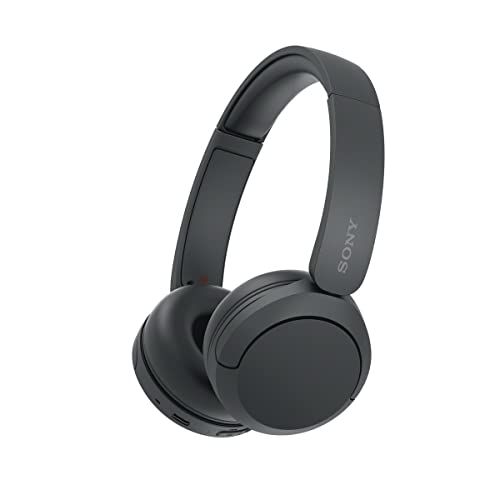
Six smart on ear headphones ranked by app control, battery figures and weight, from the 5.1 oz Sony WH-CH520 to the Beats Solo 4.

By Frederick CameronUpdated 15 min read
On this page
- What makes a pair of headphones smart, really?
- Best smart on ear headphones at a glance
- How I scored the six on app features and battery
- 1. Sony WH-CH520 Wireless On-Ear Bluetooth Headphones with — Best overall
- 2. JBL Live 670NC Wireless On-Ear Headphones — Best for families
- 3. JBL T670NCBLK Tune 670NC On-Ear Headphones — Best upgrade
- 4. Beats Solo 4 — Wireless On-Ear Bluetooth Headphones — Best premium
- 5. TMORI AI Smart Headphones with Detachable Screen — Most versatile
- 6. Tuemvia Open Ear Headphones — Best budget pick
- On-ear, over-ear or open-ear: which fits your day?
- When does a different pick win?
- What the listings leave out
- The verdict
- FAQ
The best smart on ear headphones are the Sony WH-CH520, which pairs app-based EQ and multipoint switching with a 5.1 oz frame and a claimed 50-hour battery. If you share one pair across a family and want adaptive noise cancelling, the JBL Live 670NC is the better buy, with a claimed 65-hour battery and auto play-pause. The deciding spec is not battery. It is what the companion app actually lets you change.
What makes a pair of headphones smart, really?
"Smart" gets stamped on almost anything with Bluetooth. That is the trap. The word on the box does not tell you whether the headphones do anything intelligent once they are on your head.
Here is the honest position: Amazon's search for the best smart on ear headphones returns a mix, and not every pick meets a strict reading of "smart." Two of these six are over-ear or open-ear, not on-ear. So treat the smart label as a shopping filter you apply yourself, not a promise the listing keeps.
The real dividing line runs through the companion app and the on-headphone controls. That is where smart features live. A useful checklist:
- App EQ. Can you reshape the sound, or are you stuck with the factory tuning?
- Multipoint. Does it hold two devices at once, so a call interrupts a movie cleanly?
- Adaptive ANC. Does the noise cancelling adjust to your surroundings, or is it a single on-off switch?
- Voice assistants. Can you trigger Alexa or Google from the earcup?
- Auto sensing. Does the music pause when you take them off?
Four of these six list an app or an assistant hook. Two lean on hardware smarts instead: a screen, a translation engine, a battery display. Match the feature to how you listen. The best smart on ear headphones for you are the ones whose smart features you will use daily, not the ones with the longest bullet list.
Best smart on ear headphones at a glance
| Pick | Battery (claim) | Smart features | Price |
|---|---|---|---|
Best overall Sony WH-CH520 |
50 hr claim | App EQ, multipoint, mic | Check Price |
Best for families JBL Live 670NC |
65 hr claim | Adaptive ANC, multipoint, Alexa/Google | Check Price |
Best upgrade JBL Tune 670NC |
Not listed | Adaptive ANC, app EQ, LE Audio | Check Price |
Best premium Beats Solo 4 |
50 hr claim | Spatial audio, head tracking | Check Price |
Most versatile TMORI AI Headphones |
Not listed | 115-language translation, LCD screen, ANC | Check Price |
Best budget pick Tuemvia Open Ear |
35 hr claim | LED display, touch buttons | Check Price |


How I scored the six on app features and battery
I did not test these on my head. I lined up the published specs and feature claims side by side and weighted them for what a smart-headphone buyer actually decides on. Criteria and their rough weights below.
- App and smart controls, 35%. The whole point of the category. App EQ, multipoint, adaptive ANC and voice assistants scored highest. A screen or a translation engine counted here too.
- Battery claim, 25%. Where a figure was published, longer scored better. The Sony and Beats both claim 50 hours; the JBL Live 670NC claims 65.
- Fit and weight, 20%. On-ear pairs should be light. The Sony's 5.1 oz beats the JBL Tune's 6.14 oz and towers over the Beats at 1.19 lb.
- Warranty and seller confidence, 20%. A stated warranty and more than one listed seller both raised a pick. Two of these publish only a short warranty or none.
Why those weights? Because smart features are the reason you searched. Battery matters, but every pick here clears a day of use. Fit decides whether you keep wearing them. Warranty is the quiet tiebreaker most guides ignore.
1. Sony WH-CH520 Wireless On-Ear Bluetooth Headphones with — Best overall
The Sony WH-CH520 wins because it delivers the core smart features shoppers actually use, in the lightest on-ear frame here.
Best for: commuters who want app EQ and 50-hour battery in a 5.1 oz frame Skip it if: you need active noise cancelling
At 5.1 oz, the WH-CH520 is the lightest pick in this set, and the difference is not small. It undercuts the JBL Tune 670NC's 6.14 oz and sits far below the Beats Solo 4's 1.19 lb. For a headphone that rests on your ears rather than around them, that weight is what decides whether hour three still feels fine.
The smart case is solid. Sony says you get customizable EQ through the Headphones Connect app, so you are not locked into the factory tuning. It lists multipoint, meaning it holds two devices and switches between them. There is a built-in mic for hands-free calls. Sony claims up to 50 hours of battery with quick charging over the included USB-C cable.
It sells faster than the rest of this set, and two sellers list it, which is more reassurance than the single-seller picks offer. The trade-off is plain: no noise cancelling. If you commute through loud transit, the JBL pair with adaptive ANC will serve you better. For everyone else, this is the balanced default.
Pros:
- Lightest here at 5.1 oz
- App EQ through Sony Headphones Connect
- Multipoint holds two devices
- 50-hour battery claim with USB-C fast charge
- The one buyers choose most often here
Cons:
- No active noise cancelling
- No spatial audio like the Beats
- Plastic build feels basic against premium picks
2. JBL Live 670NC Wireless On-Ear Headphones — Best for families
The JBL Live 670NC earns the family pick with adaptive ANC, the longest battery claim here and a wear-sensor that pauses playback automatically.

Best for: households sharing one pair across phones and tablets Skip it if: you want the lightest possible headband
This is the most feature-dense pick in the set. JBL says two noise-sensing mics drive True Adaptive ANC that adjusts in real time. It claims up to 65 hours with ANC off, and 50 hours with ANC on, plus 5 minutes of charging for 4 more hours. That 65-hour figure is the highest battery claim of the six.
For a shared pair, the smart touches add up. It connects to two Bluetooth devices at once, so a call lands cleanly mid-movie. Tap the earcup for Alexa or Google. And the auto play-pause stops the music when someone lifts them off. JBL leans on 40mm drivers for what it calls spatial sound.
It carries a 1-year manufacturer warranty, and it measures 9 x 2 x 8 in. It is the second-most-expensive pick here, and it is the slowest seller of the six by a wide margin. The trade-off against the Sony is weight and price position. You pay more and get a fuller feature list, but no weight figure is published, so lightness is not its pitch.
Pros:
- Highest battery claim at 65 hr
- True Adaptive ANC via two mics
- Auto play-pause on removal
- Alexa and Google from the earcup
- 1-year manufacturer warranty
Cons:
- Slowest seller in this set
- Second-most-expensive pick here
- No published weight figure
3. JBL T670NCBLK Tune 670NC On-Ear Headphones — Best upgrade
The JBL Tune 670NC is the step-up buy: adaptive ANC and app EQ at a lower price position than the flagship JBL.

Best for: students who want adaptive ANC and app EQ without the top price Skip it if: you need a warranty longer than 90 days
The Tune 670NC packs newer connectivity than most of this set. JBL lists Bluetooth 5.3 with LE Audio and Audio and Video modes in the app to match sound to what you are doing. That is a genuinely smart touch: Video mode is built to keep sound and picture in sync.
The smart layer is strong for the price. JBL says it has Adaptive Noise Cancelling with Smart Ambient, so you can let outside sound in without pulling the headphones off. The free JBL Headphones app carries preset EQ modes and a custom curve. VoiceAware handles calls from the earcup buttons. It weighs 6.14 oz and measures 7.87 x 6.69 x 2.87 in.
Here is the catch, and it is a real one. The warranty is 90 days limited, the shortest of any pick here, and only one seller lists it. That is a step down from the two JBL and Sony picks with a full year. For a smart on ear headphones upgrade with adaptive ANC, though, the value density is hard to match. Weigh the short warranty against the feature set.
Pros:
- Bluetooth 5.3 with LE Audio
- Adaptive ANC with Smart Ambient
- App EQ with presets and custom curve
- Second-cheapest pick here
- Audio and Video sync modes
Cons:
- 90-day warranty, shortest here
- Only one seller lists it
- No published battery figure
4. Beats Solo 4 — Wireless On-Ear Bluetooth Headphones — Best premium
The Beats Solo 4 is the premium pick for Apple users, built around spatial audio and dynamic head tracking.

Best for: iPhone owners who want spatial audio and head tracking Skip it if: you carry a light bag and count every ounce
The Beats bring the one smart feature nobody else here matches. Beats says the Solo 4 offers Personalized Spatial Audio with dynamic head tracking, so the soundstage stays fixed as you turn your head. For movies and immersive tracks, that is the standout on this list. It also lists custom acoustic architecture and updated drivers, and a claimed 50 hours of battery.
Comfort claims are strong: an ultralight ergonomic design, a flex-grip headband, angled adjustable earcups and UltraPlush cushions. It is Apple and Android compatible, and it ships with the Apple One-Year Limited Warranty. It released in 2024.
Now the honest weakness. The listed weight is 1.19 lb, by far the heaviest here, roughly four times the Sony's 5.1 oz. "Ultralight" is Beats' word, not a measured fact, and the number tells a different story. It is also the most expensive pick in the set. The trade-off is clear: you pay top price and carry the heaviest pair for spatial audio and the Apple ecosystem fit. If those two things do not matter to you, cheaper picks here do more of the everyday smart work.
Pros:
- Spatial audio with head tracking
- 50-hour battery claim
- Apple One-Year Limited Warranty
- Apple and Android compatible
- Two sellers list it
Cons:
- Heaviest at 1.19 lb
- Most expensive pick here
- No app EQ claim listed
5. TMORI AI Smart Headphones with Detachable Screen — Most versatile
The TMORI is the versatility pick, built around on-headphone translation and a detachable LCD screen no rival here offers.

Best for: frequent travelers who want on-headphone translation and a screen Skip it if: you want a proven seller with a long track record
No other pick tries to do this much. TMORI says the headphones deliver 115-language real-time two-way translation, which turns them into a travel tool as much as a listening device. They add a detachable full-color LCD touchscreen for changing settings without your phone, a built-in flashlight and photo control. These are over-ear, not on-ear, so weigh that against the search you ran.
The core audio smarts are here too. TMORI lists Hybrid Active Noise Cancellation, claiming it tunes out 98% of ambient noise, plus Hi-Fi stereo and Bluetooth 6.0 with automatic reconnection. The earpads are memory-foam leather with a foldable design. It carries a 1-year warranty and model X1 PRO.
The caution is the track record. Only one seller lists it, and it is the slowest-moving pick here by a large margin. No weight or battery figure is published, so two specs you would normally compare are simply absent. Treat the 98% and 115-language numbers as the maker's claims, not verified results. The trade-off is exposure: you get the widest feature set in the set and the least proof behind it.
Pros:
- 115-language translation claim
- Detachable full-color LCD screen
- Hybrid ANC and Bluetooth 6.0
- Foldable memory-foam design
- 1-year warranty
Cons:
- Over-ear, not on-ear
- Only one seller lists it
- No weight or battery figure published
6. Tuemvia Open Ear Headphones — Best budget pick
The Tuemvia is the cheapest way into smart audio here, with an open-ear fit and a battery display built into the case.

Best for: runners who want an open-ear fit and a battery display Skip it if: you want a warranty or a sealed, private listen
This is the outlier and the value entry. It is the cheapest of the six. Rather than an on-ear cushion, Tuemvia uses an open-ear ear-hook design that the listing says stays put during intense exercise and leaves your ears open to traffic and voices. For a runner, that awareness is the whole appeal.
The smart hardware is simple but useful. Tuemvia lists an LED power display on the charging case for battery and charge status, and a claimed 35-hour total playtime. It uses multi-function touch buttons for music and calls, low-latency Bluetooth, and a sweat- and water-resistant build for workouts and rain. Model FWC-LYEJ-B, one included pair.
Two honest weaknesses. The warranty field reads "no," so there is no stated warranty at all, the only pick here in that spot. And the open-ear design means no seal, so it will not block noise or keep your audio fully private. It is also not on-ear in the traditional sense, so match it to the search carefully. The trade-off is coverage for cost: you give up isolation and a warranty for the lowest price and an open, aware fit.
Pros:
- Cheapest pick in the set
- Open-ear fit for workouts
- LED battery display on case
- 35-hour playtime claim
- Sweat and water resistant
Cons:
- No stated warranty
- No noise isolation from open design
- Only one seller lists it
On-ear, over-ear or open-ear: which fits your day?
This set spans three fit types, and fit changes everything about the smart features you can use comfortably. Sort yourself first.
- On-ear (Sony WH-CH520, JBL Live 670NC, JBL Tune 670NC, Beats Solo 4): cushions rest on your ears. Lighter and more portable than over-ear. The Sony's 5.1 oz is the friendliest for long wear.
- Over-ear (TMORI): cups surround the ear. Usually better isolation, more room for a screen and larger drivers, but bulkier.
- Open-ear (Tuemvia): hooks sit outside the ear canal. Great awareness for running, no isolation, no private listen.
If you commute or work in an office, an on-ear or over-ear pair with ANC serves you better. If you run outdoors and want to hear cars, the open-ear Tuemvia is the safer call even though it seals nothing. The smart features you value only matter if the fit lets you wear the headphones long enough to use them.
When does a different pick win?
The Sony is the default, but three specific conditions flip the recommendation. Each is checkable before you buy.
- If you commute through loud transit, choose the JBL Live 670NC. The Sony has no ANC. The JBL claims True Adaptive noise cancelling that adjusts in real time, and a 65-hour battery to outlast long days.
- If you live inside the Apple ecosystem and want cinematic sound, choose the Beats Solo 4. Spatial audio with head tracking is the one thing no other pick here offers, and the Apple One-Year Limited Warranty backs it.
- If you travel abroad often, choose the TMORI. On-headphone translation across 115 languages is a genuine travel tool, provided you accept a single-seller listing and no published weight.
A fourth flip on budget: if price is the deciding factor and you want awareness while running, the open-ear Tuemvia is the cheapest route in, with the caveat that it carries no stated warranty. Match the flip to your day, not to the longest bullet list.
What the listings leave out
Even a full listing hides things. Here is what to check yourself before you commit to any smart on ear headphones.
- Missing battery figures. The JBL Tune 670NC and TMORI publish no battery number. Do not assume parity with the pairs that claim 50 or 65 hours.
- Missing weight. The JBL Live 670NC and TMORI list no weight. If long wear matters, that gap is worth resolving before you buy.
- App availability. Sony and JBL name their apps. Confirm the app is current and covers your phone before you rely on EQ or ANC controls.
- Warranty length. The Tune 670NC is 90 days, the Tuemvia has none stated. The others list a year.
- Claim versus measurement. "98% noise reduction" and "spatial audio" are the makers' words. Treat percentages and marketing terms as claims, not proof.
The best smart on ear headphones for you are the ones whose gaps you can live with. Read the live listing for anything marked "not listed" above.
The verdict
If you want one balanced pair that covers the everyday smart features without fuss, the Sony WH-CH520 is the pick. At 5.1 oz it is the lightest here, it offers app EQ and multipoint, and Sony claims 50 hours of battery over USB-C. It is also the fastest-moving pick in this set and carries a full year of warranty. That combination of light weight, real app control and seller confidence is why it leads.
If your day involves loud commutes and shared devices, the JBL Live 670NC is the better buy. Its exact advantage over the Sony is active noise cancelling: True Adaptive ANC driven by two mics, plus the highest battery claim here at 65 hours and auto play-pause. The cutoff is noise. Below a noisy threshold, the lighter, cheaper Sony wins on comfort and value. Above it, where isolation earns its keep, the JBL's ANC justifies the higher price and heavier feel. Apple users chasing spatial audio should step to the Beats Solo 4 instead, accepting its 1.19 lb weight. Everyone else starts with the Sony.
FAQ
Are smart on ear headphones worth it over basic Bluetooth?
Smart on ear headphones are worth it when you will use the extra controls. App EQ, multipoint switching and adaptive ANC change daily listening in ways a basic pair cannot. The Sony WH-CH520 adds custom EQ and two-device switching. If you only stream to one phone and never adjust sound, a plain pair covers you.
Is the Beats Solo 4 worth the premium price here?
The Beats Solo 4 is worth it mainly for Apple users who want spatial audio with head tracking, a feature no other pick in this set offers. It also ships with the Apple One-Year Limited Warranty. But it is the heaviest here at 1.19 lb and the most expensive. If you skip spatial audio, cheaper picks do more everyday smart work.
Do these headphones support multipoint for two devices?
Multipoint for two devices is listed on the Sony WH-CH520 and both JBL picks. It lets you hold a phone and a laptop at once, so a call interrupts a video cleanly. The Beats and TMORI listings do not name multipoint the same way. If juggling two devices matters, the Sony and JBL pairs are the safe choices.
Sony WH-CH520 or JBL Live 670NC for a noisy commute?
For a noisy commute, the JBL Live 670NC beats the Sony WH-CH520 on one decisive point: it has active noise cancelling and the Sony does not. JBL claims True Adaptive ANC and up to 65 hours of battery. The Sony is lighter at 5.1 oz and cheaper, so for quiet spaces it wins. Noise level decides it.
What is the biggest mistake buying smart headphones?
The biggest mistake buying smart headphones is trusting the bullet list over the specs that are actually published. Two picks here list no weight or battery figure, and one has no stated warranty. Percentages like "98% noise reduction" are marketing claims, not measurements. Check the live listing for the numbers that matter to you before you commit.
Start by naming the one smart feature you will use every single day, then buy the pair that does it well rather than the pair that does the most on paper. For most people that feature is app EQ plus clean two-device switching, and the Sony WH-CH520 delivers both in the lightest frame here at 5.1 oz, with a year of warranty behind it. If loud commutes or the Apple ecosystem describe your day, step to the JBL Live 670NC or the Beats Solo 4 instead. Check the current listing for anything marked not listed, then pick.