Best Budget Swimming Headphones by Waterproof Rating

Five open-ear picks compared on submersion depth, playtime and onboard storage, with a clear note on where the listings stop short of a real pool promise.

By Frederick CameronUpdated 15 min read
On this page
- Best budget swimming bone conduction headphones at a glance
- Why three picks were cut before the shortlist
- 1. CXK Bone Conduction Headphones Bluetooth 6.0 Open Ear — Best overall
- 2. ZOVIMAX Bone Conduction Headphones — Best upgrade
- 3. CXK Bone Conduction Headphones IPX8 Waterproof Swimming — Best for families
- 4. PSIER Bone Conduction Headphones — Most versatile
- 5. PSIER Bone Conduction Headphones (X34-C) — Best premium
- Does IPX8 mean these best budget swimming bone conduction headphones work in a pool?
- Bluetooth or MP3 mode: which do you actually need?
- How much playtime is enough for your swim?
- What the listings do not tell you
- The verdict
- FAQ
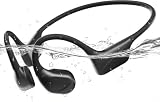
The best budget swimming bone conduction headphones here are the CXK X16, a 1.06 oz open-ear pair that is also the cheapest of the five. If you want the deepest published submersion figure instead, the ZOVIMAX X7 MAX claims 5 meters for 2.5 hours and sits second-cheapest. One number splits this field, and it is not sound quality. It is the waterproof rating, because IPX7 and IPX8 are different promises about what happens when you push off the wall.
Best budget swimming bone conduction headphones at a glance
| Pick | Waterproof claim | Playtime claim | Price |
|---|---|---|---|
| IPX7 claim | 10 hours | Check Price | |
Best upgrade ZOVIMAX Bone Conduction Headphones |
IPX8 claim, 5 m / 2.5 hr | 12 hours (8 hr also stated) | Check Price |
Best for families CXK Bone Conduction Headphones IPX8 Waterproof Swimming |
IPX8 claim, 2 m | 12 hours | Check Price |
Most versatile PSIER Bone Conduction Headphones |
IPX8 claim, 2 m / 1 hr | 8 hours | Check Price |
Best premium PSIER Bone Conduction Headphones (X34-C) |
IPX8 claim, 2 m / 1 hr | 8 hours | Check Price |


Why three picks were cut before the shortlist
I started with a wider pool of open-ear listings and cut on three grounds before ranking anything.
- No stated submersion depth. A listing that says "waterproof" without a rating or a depth is telling you nothing you can hold it to. Four of the five survivors publish a depth figure in meters.
- No onboard storage and no water claim. Bluetooth does not travel well through water. A pair with neither MP3 mode nor a submersion figure is a running headphone wearing a swimming label.
- No warranty term in the listing. Every pick here publishes one. Three state one year, and the ZOVIMAX X7 MAX states two, which is the longest in the set.
What survived is a tight group. All five sit in the Open-Ear Headphones category, all five claim Bluetooth 6.0, and all five ship as a single unit rather than a multipack. That makes the comparison unusually clean, because the differences that remain are the ones you can actually read off the page: depth, playtime, storage and weight.
I ranked on the strength of the published water claim first, then on how much the listing tells you, then on price position. The cheapest pick winning is not an accident of this set. It is what happens when a category's premium tier charges for storage capacity rather than for a better seal.
1. CXK Bone Conduction Headphones Bluetooth 6.0 Open Ear — Best overall
The lightest and cheapest pick here, and the one buyers in this set choose most often.
Best for: everyday runners and gym users who want the lightest wraparound fit Skip it if: you need onboard storage for phone-free swimming
The X16 is the cheapest of the five and the fastest seller of the group, and it earns the top spot on the strength of what it publishes. Weight is listed at 1.06 oz. CXK's own copy puts the frame at 28g with a flexible titanium band, which lines up with that figure. Colour is Matte Black, warranty is one year.
Here is the honest caveat. CXK claims IPX7 for this model, not IPX8, and IPX7 is the shallower of the two promises. That makes the X16 the best pick in this set for sweat, rain and the shower, and the weakest of the five for a pool lane. If you are buying primarily to swim, the water claim below it in this list is stronger.
What you get instead is the lightest listed body, a 10-hour playtime claim, and Bluetooth 6.0 for pairing on land. CXK also points to its Boean app with a custom EQ. Treat that as a bonus rather than a reason to buy, since app support is the first thing to age in cheap audio. The trade-off against the rest of the set is simple: you give up submersion depth and MP3 storage, and you get the lowest price and the lightest fit.
Pros:
- Cheapest of the five picks here
- Lightest listed body at 1.06 oz
- Titanium wraparound frame per CXK's claim
- 10-hour playtime claim on one charge
- One-year warranty stated
Cons:
- IPX7 claim only, the shallowest water rating in this set
- No onboard MP3 storage mentioned
- No submersion depth published in meters
- Only one seller lists it
2. ZOVIMAX Bone Conduction Headphones — Best upgrade
The deepest published water claim in the set, from the second-cheapest pick.

Best for: buyers who want the deepest published submersion figure without paying the most Skip it if: you want a listed weight before you commit
The X7 MAX is where the water case gets serious. ZOVIMAX claims IPX8 protection with full submersion to 5 meters for up to 2.5 hours. Every other IPX8 pick here stops at 2 meters and one hour. That is a meaningful gap on paper, and it comes from the second-cheapest pick in the group rather than the priciest.
The warranty is the other standout. Two years, against one year on every other pick. In a category where a failed seal is the most likely way a pair dies, a longer cover period is worth more than an extra decibel of bass.
The listing has two rough edges. First, the playtime numbers disagree with themselves: the headline says 12 hours of music, the detail says up to 8 hours of continuous playback, with a 2-hour full charge. Read the shorter figure as the safer planning number. Second, no weight is listed at all, so you cannot compare it to the 1.06 oz on either CXK pick. ZOVIMAX cites 14.2mm dynamic drivers and Bluetooth 6.0, plus MP3 mode for phone-free swimming. What it does not do is give you a storage capacity, which the premium PSIER does.
Pros:
- 5 m submersion claim for 2.5 hours, deepest here
- Two-year warranty, longest in this set
- Second-cheapest of the five
- MP3 mode for swimming without a phone
- 14.2mm dynamic drivers per the listing
Cons:
- Playtime claims contradict each other, 12 hours versus 8
- No weight published anywhere in the listing
- No storage capacity stated for MP3 mode
- Only one seller lists it
3. CXK Bone Conduction Headphones IPX8 Waterproof Swimming — Best for families
A 12-hour playtime claim and a triple-seal design, at roughly mid-range for this set.

Best for: two or three people sharing one pair across running and water sessions Skip it if: you prefer a brand with more than one seller behind it
The X17 is the pool-ready sibling of my top pick, and the specifications tell you where the extra money goes. CXK claims IPX8 with a triple-seal design and immersion to 2 meters, against the X16's IPX7. Playtime rises to a claimed 12 hours, the joint-highest figure in this set. Weight is still listed at 1.06 oz, matching the X16 exactly, which is why I like it for shared use: a lighter band suits a wider range of head sizes than a bulky one.
Size is listed as One Size, colour as Pitch Black, warranty as one year, model as X17. CXK also names a 15x10mm PulseCraft transducer, plus magnetic charging that sidesteps a fiddly waterproof port cover. Magnetic contacts are the right call on anything you submerge, since a rubber flap is the part most likely to be left open.
Its position in the set is a compromise rather than a peak. The submersion depth matches the two PSIER picks and falls short of the ZOVIMAX. The price sits above the two entry picks without buying a longer warranty. What it does own outright is the combination of a 12-hour claim, a listed 1.06 oz weight and an IPX8 rating, which no other pick here delivers together.
Pros:
- 12-hour playtime claim, joint-highest in this set
- IPX8 with triple-seal design per CXK
- Listed at 1.06 oz, joint-lightest here
- Magnetic charging, no port flap to leave open
- MP3 mode alongside Bluetooth 6.0
Cons:
- 2 m depth claim, well short of the ZOVIMAX figure
- One-year warranty against the ZOVIMAX two
- Costs more than the entry picks for the same warranty term
- Only one seller lists it
4. PSIER Bone Conduction Headphones — Most versatile
The only pick here that states multi-device pairing, backed by a one-year manufacturer warranty.

Best for: multi-device users who switch between a phone, a laptop and MP3 mode Skip it if: you want the longest playtime in the set
The S18 is the one listing in this group that promises connecting two or more devices, which matters more than it sounds. Swap between a phone at the pool and a laptop at a desk and multipoint pairing saves you a menu dive every time. PSIER states IPX8 with submersion to 2 meters for one hour, Bluetooth 6.0 with low latency, and a 14mm driver.
It is also the only pick with more than one seller behind it, which is a small signal about how established the listing is. Size is listed as One Size Fits Most, colour Matte Black, warranty one year manufacture, model S18.
Where it falls behind is stamina. PSIER claims 8 hours in Bluetooth mode, the shortest figure in this set against 10 hours on the X16 and 12 on two others. There is no listed weight either, so the 1.06 oz comparison is unavailable. And this is the more expensive of the two price positions here, which is a lot to pay for the same 2-meter depth claim the mid-priced CXK makes. Buy the S18 for the pairing flexibility and the driver size, not for the water numbers, because those it matches rather than beats.
Pros:
- Multi-device pairing, unique in this set
- IPX8 claim, 2 m submersion for one hour
- 14mm driver stated by PSIER
- Bluetooth 6.0 with MP3 mode
- Two sellers stock it
Cons:
- 8-hour playtime claim, shortest here
- No weight listed for comparison
- Priced above picks with equal or better water claims
- One-year warranty against the ZOVIMAX two
5. PSIER Bone Conduction Headphones (X34-C) — Best premium
The only pick that names its storage capacity: 32GB, or roughly 8,000 songs by PSIER's count.
Best for: swimmers who want 32GB of onboard storage stated up front Skip it if: you are shopping the cheap end of this category
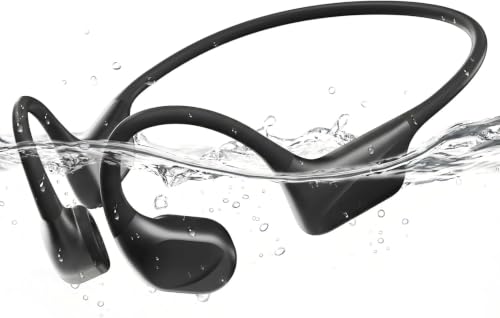
The X34-C is the most expensive pick here and the slowest seller of the five, and its case rests on one number the others leave blank. PSIER states a built-in 32GB memory card holding up to 8,000 songs. Every other MP3-capable pick in this set mentions the mode without telling you the capacity. If you swim without a phone, that is the figure you want in writing.
PSIER also describes a hybrid bone and air conduction dual-driver setup rather than bone conduction alone, plus a seamless liquid silicone coating for the fit. Water claim is IPX8, 2 meters for one hour. Warranty is one year manufacturer, colour Black, model X34-C, size listed as Normal.
The problem is the price position. It costs the most in this group while claiming 8 hours of playtime, the shortest figure here, and a 2-meter depth the mid-priced CXK also claims. The ZOVIMAX beats it on depth, on warranty length and on price. So the X34-C is a narrow recommendation: it wins if the 32GB number is what closes the decision for you, and it loses on almost every other line in the table. The Boean app and its AI tuning are a footnote, not a reason.
Pros:
- 32GB onboard storage, the only stated capacity here
- Hybrid bone and air conduction drivers claimed
- IPX8 rating, 2 m for one hour
- Liquid silicone coating for a soft fit
- One-year manufacturer warranty stated
Cons:
- Highest price position in the set
- 8-hour playtime claim ties for shortest here
- 2 m depth claim beaten by the cheaper ZOVIMAX
- No weight published
- Slowest seller of the five
Does IPX8 mean these best budget swimming bone conduction headphones work in a pool?
Not automatically, and this is the one place where the shopping question and the listing data pull apart. IPX8 is a submersion rating. It describes water resistance, not sound transmission. None of these listings publishes a lap-swimming test, a stroke type or a chlorine tolerance figure, so no pick here can be promised as a swim-proven product on the data I have.
What you can read off the page is the depth claim, and those differ sharply.
- ZOVIMAX X7 MAX: IPX8, 5 meters, up to 2.5 hours
- CXK X17: IPX8, 2 meters, triple-seal design
- PSIER S18 and X34-C: IPX8, 2 meters, one hour
- CXK X16: IPX7 only, no depth stated
Judge the rest yourself. Look for a stated depth in meters rather than the bare word "waterproof". Check whether charging is magnetic or uses a covered port, because a flap is a failure point. And check whether MP3 mode exists at all, since Bluetooth range collapses underwater and a phone on the pool deck is out of reach the moment you submerge. If a listing skips all three, it is a running headphone with a swim photo.
Bluetooth or MP3 mode: which do you actually need?
Both, and for different halves of your week. Bluetooth 6.0 appears on all five picks and handles land use: runs, walks, the gym, calls. MP3 mode is what makes water use possible, because it stores the music on the headphones themselves and cuts the phone out of the chain.
Four of the five picks state MP3 mode. Only the X34-C tells you the capacity, at 32GB. My top pick, the X16, does not mention onboard storage at all, which is the single biggest reason it is a running-first recommendation rather than a swimming-first one.
Here is the trick most shoppers miss. Loading an MP3-mode pair means plugging it into a computer and dragging files across, the way an old iPod worked. Streaming subscriptions generally will not transfer, so you need files you own. If your entire library lives inside a streaming app, MP3 mode is a feature you will never use, and you should buy on weight, playtime and warranty instead. That reshuffles this list completely: the X16 at 1.06 oz becomes the obvious answer, and the 32GB premium pick becomes irrelevant.
How much playtime is enough for your swim?
More than you think, because you charge these less often than you charge earbuds and you will forget.
The published claims here span 8 to 12 hours. The X16 states 10 hours. Both the CXK X17 and the ZOVIMAX headline 12 hours, though ZOVIMAX also states 8 hours of continuous playback in the same listing, and both PSIER picks state 8. Charging time is published once: ZOVIMAX says a full charge takes 2 hours.
Do the arithmetic against your own routine. A 45-minute swim four times a week is three hours of use. An 8-hour claim covers roughly two and a half weeks of that, and a 12-hour claim closer to four. Either is fine. The figure matters far more if you also wear them for a daily commute and a gym session, because then you are into daily-charge territory and the 8-hour picks start to annoy.
One practical note on magnetic charging, which CXK names on the X17 and ZOVIMAX describes as fast magnetic. It is the better system on anything you submerge, because there is no rubber cover to seal wrongly. Losing the proprietary magnetic cable is the real risk, so keep the box.
What the listings do not tell you
Plenty, and it is worth knowing where the gaps sit before you commit to any of the best budget swimming bone conduction headphones on this page.
- Weight, on three of five. Both CXK picks list 1.06 oz. ZOVIMAX and both PSIER models publish nothing. That is the specification a wraparound headphone lives or dies on.
- Chlorine and salt water tolerance. No listing here addresses either. Rinsing with fresh water after every session is standard care in this category and costs nothing.
- Fit range. "One Size", "One Size Fits Most" and "Normal" appear across the set. None of them is a measurement.
- Battery replacement. Sealed waterproof bodies rarely open. Treat the warranty term as the meaningful number, which is where the ZOVIMAX two years pulls ahead of four one-year listings.
- Seller depth. Only the PSIER S18 lists more than one seller. Every other pick has a single one.
Most of these blanks are normal at this end of the market. The point is not to be scared off. It is to weight your decision toward the numbers that are actually printed, and to treat everything else as unknown rather than as reassurance.
The verdict
If you mostly run, walk and lift, and you swim occasionally, buy the CXK X16. It is the cheapest pick here, it is the joint-lightest at 1.06 oz, it claims 10 hours of playtime, and it sells faster than anything else in this set. Its IPX7 claim is fine for sweat and rain, and honest about not being a lane-swimming promise.
If you are buying primarily to swim, buy the ZOVIMAX X7 MAX. It publishes the deepest submersion claim in this group at 5 meters for up to 2.5 hours, it carries a two-year warranty against one year everywhere else, and it is the second-cheapest pick. That combination is unusual: normally the strongest water claim comes from the priciest listing, and here it does not.
The cutoff is your weekly water time. Under one session a week, the X16's lower price and lighter listed body win. One session a week or more, the ZOVIMAX's depth figure and longer cover period are worth the small step up.
The X34-C's exact advantage is 32GB of stated storage, roughly 8,000 songs by PSIER's count, and it is the only listing here that names a capacity. Pay the premium only if phone-free swimming is the whole reason you are shopping.
FAQ
Are budget bone conduction headphones worth it for swimming?
Budget bone conduction headphones are worth it for swimming if the listing publishes a submersion depth and an MP3 mode. Four picks here state IPX8 with a depth in meters, and four state MP3 mode. Without onboard storage, Bluetooth alone leaves your phone stranded on the pool deck, and the headphones go quiet the moment you submerge.
What do you actually get for more money in this category?
More money in this category buys storage capacity and stated features, not a better seal. The most expensive pick, the PSIER X34-C, claims the same 2-meter IPX8 depth as the mid-priced CXK X17 and the shortest playtime at 8 hours. Its genuine addition is 32GB of onboard storage. The cheaper ZOVIMAX claims 5 meters and a two-year warranty.
CXK X16 or ZOVIMAX X7 MAX: which should I buy?
Choose the CXK X16 if land use dominates. It is cheaper, it lists 1.06 oz, and it claims 10 hours. Choose the ZOVIMAX X7 MAX if you swim regularly, since it claims IPX8 to 5 meters for 2.5 hours and carries a two-year warranty against the X16's one year and IPX7 rating.
Is IPX7 good enough, or do I need IPX8?
IPX7 is good enough for sweat, rain and rinsing, which covers running and gym use. IPX8 is the stronger submersion claim and is what every swimming-labelled pick here states. My top pick, the CXK X16, claims IPX7 only. That is the reason I frame it as a running-first buy rather than a lane-swimming one.
What is the most common mistake buying swimming headphones?
The most common mistake buying swimming headphones is assuming a streaming subscription will transfer to MP3 mode. It generally will not. Onboard storage needs music files you own, dragged across from a computer. If your library lives entirely inside an app, ignore storage capacity and shop on weight, playtime and warranty length instead.
Start with your calendar rather than the specification sheet. Count how many water sessions you genuinely do in a month, then check whether you own any music files at all. Those two answers pick your pair faster than any driver size will. For most people the CXK X16 is the right default, because it is the cheapest way into open-ear audio, it publishes a real weight figure at 1.06 oz, and it does the thing you will do most often, which is exercise on dry land. Swim more than that and the ZOVIMAX depth claim earns the upgrade.