Best On-Ear Headphones for Commuting: Sony ZX Wins

Five on-ears ranked for the daily commute, from a 4.76 oz Sony wired pair to a JBL wireless set with a 40-hour battery. One winner, four honest trade-offs.

By Frederick CameronUpdated 13 min read
On this page
- Best on ear headphones for commuting at a glance
- How I screened these five on-ears
- 1. Sony MDR-ZX110 — Best overall
- 2. Sony WH-CH520 — Best minimal setup
- 3. Panasonic RP-HT21 — Best for pros
- 4. SNOWSKY FiiO Wind PRO — Runner-up
- 5. JBL Tune 510BT — Best premium
- Wired or wireless for the daily commute?
- What actually decides an on-ear for commuting
- Weight, cord and clamp: the numbers that matter
- What to watch out for on a crowded train
- The verdict
- FAQ
The best on ear headphones for commuting are the Sony MDR-ZX110, a 4.76 oz wired pair with folding earcups and an L-shaped 3.5mm plug on a 3.94 ft cord. If you refuse to carry a cable, the Sony WH-CH520 is the pick instead, a 5.1 oz wireless set the listing rates at up to 50 hours per charge with multipoint pairing.
The deciding specification splits this field cleanly. It is not driver size. It is not bass. It is the combination of on-head weight and how the cups behave when you take the headphones off at your stop. Everything else follows from that.
Best on ear headphones for commuting at a glance
| Pick | Weight | Wired or wireless | Price |
|---|---|---|---|
Best overall Sony MDR-ZX110 |
4.76 oz | Wired, 3.94 ft cord | Check Price |
Best minimal setup Sony WH-CH520 |
5.1 oz | Wireless, 50 hr claim | Check Price |
Best for pros Panasonic RP-HT21 |
1.2 oz | Wired, 4.5 ft cord | Check Price |
Runner-up SNOWSKY FiiO Wind PRO |
2.72 oz | Wired, semi-open | Check Price |
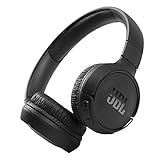
Best premium JBL Tune 510BT |
5.64 oz | Wireless, 40 hr claim | Check Price |


How I screened these five on-ears
I started with a much longer list of on-ear pairs in Amazon's on-ear headphones category and cut on three grounds. First, anything without a published weight was out. On the head for an hour a day, ounces matter more than every other spec combined. Second, anything without a stated warranty was out. A commuter's headphones live in bags and get sat on. Third, I dropped duplicate colour variants and kept one entry per model.
That left five picks that span the two ways people actually commute with on-ears: wired into a phone or laptop, or wireless over Bluetooth. Two are Sony, one is Panasonic, one is JBL, one is a boutique SNOWSKY set built with FiiO. Weights run from 1.2 oz to 5.64 oz. Warranties run from 90 days to 1 year. Every published cord is between 3.94 ft and 4.5 ft. Four of the five have released dates on the listing, ranging from 2019 to 2024.
1. Sony MDR-ZX110 — Best overall
Light, foldable and wired straight into a jack, the ZX110 is the safest default for a daily commute.
Best for: a wired commuter who wants light, folding on-ears with a phone-friendly plug. Skip it if: your phone has no headphone jack and you refuse to carry a dongle.
Two numbers do the work here. The ZX110 weighs 4.76 oz and folds at the earcups, so the headband sits low on the head and the whole pair collapses into a jacket pocket when you step off the train. The cord is 3.94 ft with an L-shaped 3.5mm plug, the shape that stays flat against a phone in a coat pocket rather than snapping off at the joint. Impedance is 24 ohm at 1 kHz, which means a phone or a laptop drives them without a separate amplifier.
Sony lists 1.38 in neodymium drivers with a claimed 12 Hz to 22 kHz frequency range, and describes the design as closed-back with cushioned pads. Treat those as manufacturer figures. What matters for commuting is the sum: light, folding, wired, cheap. The trade-off is honest. Against the CH520 you give up wireless. Against the RP-HT21 you carry more weight. Against the JBL you lose battery life you never needed in the first place.
Pros:
- 4.76 oz on the head
- Folding earcups for jacket-pocket storage
- L-shaped 3.5mm plug on a 3.94 ft cord
- 24 ohm impedance drives from a phone
- 1 year warranty
Cons:
- No wireless, so needs a jack or a dongle
- Closed-back but no isolation figure published
- Plastic build shows its price position
2. Sony WH-CH520 — Best minimal setup
A 5.1 oz wireless pair with a 50-hour battery claim and multipoint, for a phone-only commute.
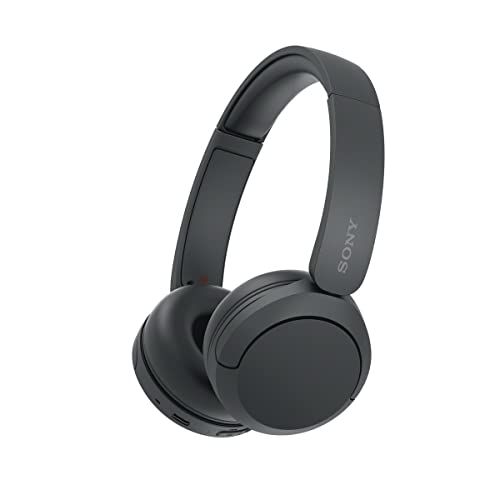
Best for: a phone-only commuter who wants no cables and multipoint pairing. Skip it if: you dislike charging another device every week or two.
The CH520 is the only wireless pair here with a stated multipoint spec. Sony's listing describes quick switching between two devices at once, which is the feature that actually earns its place on a commute: laptop paired for a call at the desk, phone paired for the walk to the platform, and a single button press moves between them. Weight is 5.1 oz, dimensions are 7.76 x 6.85 x 1.76 in, and the earcups swivel for storage. USB Type-C charges the pair, and the cable is included in the box.
Sony claims up to 50 hours of playback and quick charging. Treat 50 hours as a manufacturer figure at a modest volume. In practice a commuter charging weekly rarely sees the battery low. The built-in mic handles hands-free calls without pulling the phone out.
The honest weakness is this: the CH520 sits second slowest in this set for how quickly buyers pick it up, behind the ZX110. That likely reflects its price position rather than the product. Compared with the JBL below, it is 0.54 oz lighter but its battery claim is 10 hours higher.
Pros:
- 5.1 oz on-head weight
- 50-hour battery life claim
- Multipoint pairs two devices at once
- USB-C charging cable in the box
- 1 year warranty
Cons:
- No active noise cancellation is listed
- Battery figures are the manufacturer's, not measured
- Requires charging, unlike the wired picks
3. Panasonic RP-HT21 — Best for pros
At 1.2 oz without the cable, this is the lightest headband in the set by a wide margin.

Best for: office commuters who trail a 4.5 ft cord through a jacket to a laptop bag. Skip it if: you need sound isolation on a loud train.
The number to hold onto is 1.2 oz. That is the weight Panasonic publishes for the RP-HT21 without its cable, and it is roughly a quarter of what the ZX110 puts on your head. Panasonic calls the design open-air, with 30mm neodymium drivers and an XBS port for bass reinforcement. Open-air means the earcups do not seal against the ear, so ambient sound comes in and your audio leaks out. On a quiet office floor that is fine, even preferable when you need to hear a colleague. On a bus or a subway it is the wrong tool.
The cord runs 4.5 ft, longer than any other pick here, which is the length that reaches from a jacket collar to a laptop bag on the floor beside you. The published warranty is 90 days, the shortest in this set, and that is the trade for the price position. The wide, foam-cushioned headband is described as comfort-fit.
Where this pick wins is duration. If you commute to a desk and wear headphones for eight hours after arriving, 1.2 oz beats 4.76 oz every hour of that day. Where it loses is the platform.
Pros:
- 1.2 oz without the cable
- 30mm neodymium drivers with XBS bass port
- 4.5 ft cord, longest in this set
- Wide foam-cushioned headband
- Long-established model in the category
Cons:
- Open-air design leaks sound both ways
- 90 day warranty, the shortest here
- No inline mic or remote listed
4. SNOWSKY FiiO Wind PRO — Runner-up
A 2.72 oz retro-styled wired pair with a 40mm driver and in-line controls, aimed at listeners who care about the sound over the setting.

Best for: a quiet-train commuter who wants a lighter, retro wired pair with in-line controls. Skip it if: you commute in noisy carriages or crowded buses.
The Wind PRO is the outlier. SNOWSKY, working with FiiO, describes a 40mm dynamic driver with a composite diaphragm, an adjustable stainless-steel headband, rotating ear cups, metal components and a braided cable. The listing calls the acoustic design semi-open and says that produces a more natural, spacious sound than a closed-back pair. Weight is 2.72 oz, second-lightest here after the Panasonic. The 3.5mm cable carries in-line controls, so pause and skip work without the phone in hand.
Two things stop this being the overall winner. Semi-open has the same commuting downside as open-air: sound comes in and sound leaks out. On a quiet regional train that is a fair trade for the wider soundstage. On a crowded subway you either raise the volume to unsafe levels or annoy the person opposite. Second, this is the priciest pick and the slowest seller in the set, which speaks to its niche rather than its build.
Take this pair if the commute is mostly walking and mostly quiet, and you want a wired set that feels solid in the hand.
Pros:
- 2.72 oz on-head weight
- 40mm dynamic driver with composite diaphragm
- Stainless-steel headband and braided cable
- In-line controls on the 3.5mm cable
- 1 year warranty
Cons:
- Semi-open design leaks sound both ways
- The highest price position in this set
- Slowest seller of the five
5. JBL Tune 510BT — Best premium
Wireless, 5.64 oz, with a 40-hour battery claim and voice-assistant button, plus Bluetooth 5.0 multipoint.
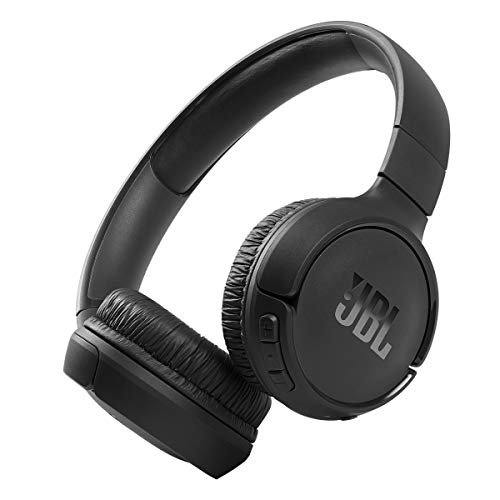
Best for: long-haul commuters who want the biggest wireless battery in this set. Skip it if: you want the lightest headband on your head all day.
The 510BT is the heaviest pick at 5.64 oz and the second wireless option in the set. JBL lists Bluetooth 5.0 streaming with switching between two devices, a 40-hour battery claim, and a recharge of as little as 2 hours over USB-C. Ear-cup buttons handle playback and calls, and a multi-function button triggers Siri or Google Assistant on the paired phone. Dimensions are 2 x 9 x 8 in and the warranty is a 1 year manufacturer term.
Against the Sony CH520, the JBL is 0.54 oz heavier, 10 hours shorter on the battery claim, and sits a step higher in this set's price ordering. What you get in return is JBL's Pure Bass tuning, which is the house sound their listing leads on, and physical buttons on the cup rather than reliance on an app. For a commuter who does the same route twice a day and wants tactile controls with a glove on, that trade may be the right one.
The weakness is straightforward. It is the heaviest pair here, and on a commute measured in ounces that shows up after the first hour.
Pros:
- 40-hour battery life claim
- Bluetooth 5.0 with device switching
- USB-C recharge in as little as 2 hours
- On-cup buttons for calls and playback
- 1 year manufacturer warranty
Cons:
- Heaviest pick at 5.64 oz
- Higher price position than the CH520
- Battery claim shorter than the Sony wireless
Wired or wireless for the daily commute?
The choice is not about sound quality at this price. It is about the shape of your commute. A wired pair like the Sony MDR-ZX110 or the Panasonic RP-HT21 will never run out of battery on the platform, never need pairing after a train's Wi-Fi hiccup, and never fail an important call because you forgot to charge them. The trade is a 3.94 ft or 4.5 ft cable that snags on backpack straps and needs a headphone jack or a dongle at the phone end.
A wireless pair like the Sony WH-CH520 or the JBL Tune 510BT drops the cable and replaces it with a charging routine. The CH520 claims 50 hours per charge, the JBL claims 40. Both list multipoint or two-device switching. Both charge over USB-C.
Practical rule: if your phone still has a 3.5mm jack and you commute on transit twice a day, wired is the lower-friction choice. If your phone has no jack, or you also take calls from a laptop, wireless earns its charging routine.
What actually decides an on-ear for commuting
Most guides in this category compare driver size. A 40mm driver in the Wind PRO, a 30mm driver in the Panasonic, 1.38 in drivers in the Sony ZX110. That is not what decides the purchase.
Three things decide it:
- On-head weight, because you wear these for the length of your commute plus whatever comes at the end.
- Whether the earcups fold or swivel flat, because storage is half the job for a commuter.
- Whether the design is closed-back, semi-open or open-air, because that determines what you hear from the outside and what the outside hears from you.
Of the five here, the ZX110 is the only pick that pairs closed-back cushioned pads with a folding earcup design and a weight under 5 oz. The CH520 and 510BT go closed-back and wireless, at a higher weight. The Panasonic and the Wind PRO trade isolation for lightness and openness. Match your commute to that grid and the winner picks itself.
Weight, cord and clamp: the numbers that matter
Here are the specs the listings publish, side by side, so you can weigh the trade-offs yourself:
- Sony MDR-ZX110: 4.76 oz, 3.94 ft cord, 24 ohm impedance, folding earcups, closed-back, 1 year warranty.
- Sony WH-CH520: 5.1 oz, wireless with 50 hr claim, multipoint, USB-C, 1 year warranty.
- Panasonic RP-HT21: 1.2 oz without cable, 4.5 ft cord, open-air, 30mm drivers, 90 day warranty.
- SNOWSKY FiiO Wind PRO: 2.72 oz, semi-open, 40mm driver, braided cable with in-line controls, 1 year warranty.
- JBL Tune 510BT: 5.64 oz, wireless with 40 hr claim, Bluetooth 5.0, USB-C, 1 year manufacturer warranty.
Clamp force is the number none of these listings publish. It is the pressure the headband applies to the sides of your head, and it is the reason two 5 oz pairs can feel completely different after an hour. Read the return policy before you commit, and be honest at day three about whether the fit is working.
What to watch out for on a crowded train
A few pitfalls the listings will not warn you about:
- Open-air and semi-open designs leak. The Panasonic and the Wind PRO are lovely for quiet listening and wrong for a rush-hour subway carriage.
- L-shaped plugs like the ZX110's sit flat against a phone in a pocket. Straight plugs snap at the joint over time.
- Multipoint on the CH520 and 510BT is only useful if you actually use two devices. Pair with one and it saves nothing.
- Battery claims are the manufacturer's. Cold weather, higher volume and older batteries all cut into the number.
- On-ear pairs sit on the ear, not around it, so glasses wearers should check the temple-arm pressure early.
The verdict
The Sony MDR-ZX110 is the best on ear headphones for commuting pick in this set. At 4.76 oz with folding earcups, a closed-back seal and a 3.94 ft L-shaped 3.5mm cable, it does the job a commuting on-ear is asked to do without demanding a charging routine, an app, or a return trip to the desk to grab a dongle.
Two conditions flip that. If your phone has no headphone jack and you refuse to carry a dongle, the Sony WH-CH520 wins instead. It is 5.1 oz, claims up to 50 hours per charge, offers multipoint switching between two devices, and charges over USB-C. The runner-up on wireless is the JBL Tune 510BT, which trades 10 hours of the battery claim and 0.54 oz on the head for on-cup buttons and JBL's Pure Bass tuning.
If your commute ends at a quiet desk and you plan to wear the headphones for hours afterwards, the Panasonic RP-HT21's 1.2 oz weight and 4.5 ft cord earn a look, provided you accept the open-air leak. The Wind PRO stays a niche pick for quiet-train listeners who value build over isolation.
FAQ
Are on-ear headphones good for commuting?
On-ear headphones are good for commuting when the pair is light, folds for storage, and uses a closed-back seal to keep some outside noise out. The Sony MDR-ZX110 at 4.76 oz with folding earcups fits that brief. Open-air designs like the Panasonic RP-HT21 leak sound both ways and are better suited to a quiet office than a busy carriage.
Is the Sony MDR-ZX110 worth it for daily use?
The Sony MDR-ZX110 is worth it for daily use if you have a headphone jack on your phone or laptop, want a pair under 5 oz, and value folding storage. It carries a 1 year warranty, uses a 3.94 ft L-shaped 3.5mm cable, and has a 24 ohm impedance that runs from a phone without an amplifier. It will not match a wireless pair for cable-free convenience.
Sony WH-CH520 or JBL Tune 510BT for a longer commute?
Sony WH-CH520 or JBL Tune 510BT depends on what you value more, weight or button feel. The CH520 is 5.1 oz with a 50-hour battery claim, multipoint, and app-based EQ. The JBL is 5.64 oz with a 40-hour claim, Bluetooth 5.0, and physical buttons on the cup for calls and voice assistants. For a longer commute the lighter, longer-lasting CH520 wins on paper.
What cord length works best for a commute?
Cord length that works best for a commute is around 4 ft, long enough to reach from a jacket pocket to a laptop bag but short enough not to loop under a bag strap. The Sony ZX110 publishes a 3.94 ft cord, the Panasonic RP-HT21 a 4.5 ft cord. Longer cords tangle on transit. Shorter cords fight your movement when you shift your bag.
Do open-back on-ear headphones make sense for commuting?
Open-back on-ear headphones do not make sense for a noisy commute. The Panasonic RP-HT21 uses an open-air design and the SNOWSKY FiiO Wind PRO uses a semi-open design. Both sound more spacious in a quiet room, but on a bus or a train they leak your audio to the seat opposite and let engine noise into your ears. Closed-back like the Sony pairs is the safer commuting choice.
If you have been sitting on a headphone-jack phone waiting for a reason to keep it, the Sony MDR-ZX110 is that reason. Order the ZX110 as the default, and add the Sony WH-CH520 to your basket only if you already know you want wireless. The rest of this set is for edge cases: the Panasonic if your commute ends at a quiet desk, the Wind PRO if you want a wired retro pair, the JBL if you want physical buttons on a wireless cup. Match the pick to your commute, not to the driver size on the box, and you will not need to replace them next year.