Best Wireless Open Ear Headphones for Seniors
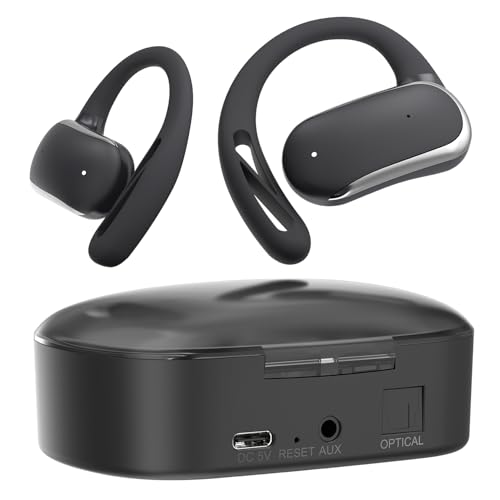
Six open-ear picks compared on weight, setup and TV compatibility. A plug-and-play 2.4GHz set leads; a 24-month Auracast pair takes the premium slot.

By Frederick CameronUpdated 16 min read
On this page
- Best wireless open ear headphones for seniors at a glance
- Who this guide is not built for
- How I cut a long shortlist down to six
- 1. DCOLOR 2.4GHz Wireless TV Headphones — Best overall
- 2. Avantree Medley Pebble 2 — Best premium
- 3. TRAUSI Open Ear Wireless Earbuds — Best upgrade
- 4. CXK Bone Conduction Headphones — Best for pros
- 5. Retekess TT042 Assistive Listening System — Best minimal setup
- 6. Tuemvia Open Ear Headphones — Best budget pick
- TV headphones or Bluetooth earbuds: which suits an older listener?
- What the listings do not spell out about fit
- How does bone conduction actually compare here?
- Small details that make daily use easier
- The verdict
- FAQ
The best wireless open ear headphones for seniors are the DCOLOR 2.4GHz Wireless TV Headphones, because a charging dock that doubles as the transmitter removes every pairing menu between an older listener and the TV, and the earpieces weigh 14.2 g each. If two people in the house want to watch together, the Avantree Medley Pebble 2 wins on its Auracast transmitter and 24-month warranty. Neither is a hearing aid, and the "seniors" label on Amazon is a marketing tag, not a certification.
Best wireless open ear headphones for seniors at a glance
| Pick | Weight / fit | Wireless type | Price |
|---|---|---|---|
Best overall DCOLOR 2.4GHz Wireless TV Headphones |
14.2 g, ear-hook | 2.4GHz dock (no Bluetooth) | Check Price |
Best premium Avantree Medley Pebble 2 |
Open-ear earbuds, drop-in dock | Auracast transmitter + Bluetooth | Check Price |
Best upgrade TRAUSI Open Ear Wireless Earbuds |
Ear-hook earbuds, IPX7 claim | Bluetooth 5.4 | Check Price |
Best for pros CXK Bone Conduction Headphones |
1.06 oz, titanium wraparound | Bluetooth 6.0 claim | Check Price |
Best minimal setup Retekess TT042 Assistive Listening System |
Bone conduction, 4.45 in body | Wired to amplifier base | Check Price |
Best budget pick Tuemvia Open Ear Headphones |
Ear-hook, LED case display | Bluetooth (version not stated) | Check Price |


Who this guide is not built for
The word "seniors" in the search box does a lot of work, and Amazon's own results tell you it does not do all of it. Some of the picks below carry the modifier in their listing, others are open-ear designs that happen to suit an older listener. None is a medical device, and none replaces a hearing aid fitted by an audiologist. If someone in the house has been told they need amplification prescribed and tuned to their hearing loss, close this tab and book that appointment first.
Two other buyers should look elsewhere. Anyone who needs strong isolation on a plane wants closed-back headphones, not open-ear ones. Anyone whose main problem is understanding speech in a noisy restaurant wants a directional hearing amplifier, not a Bluetooth headset. What follows suits a common, specific job: hearing the TV clearly from the sofa, or listening to music on a walk, without shutting the world out.
I flag "seniors" as a soft filter for a reason. The right pick is decided by what the listener will do with them, not by the label on the box.
How I cut a long shortlist down to six
Here is what got listings disqualified before the six above survived.
- Anything requiring in-ear tips. Fiddly for arthritic hands, and the point of an open-ear category is to skip them.
- Anything with weight not stated and no way to judge it from the images. Comfort at hour three is a weight question.
- Anything that hides the TV connection story. If a listing did not mention optical, 3.5 mm or a base station, it did not make the table.
Then I lined up what remained on four things:
- Whether the setup is Bluetooth pairing, a dedicated dock, or a wired base.
- Weight and fit style, because ear hooks, wraparound frames and bone-conduction bodies suit different faces.
- Published warranty length, which ranges from none stated to 24 months across this set.
- Where each pick sits in this group on price, which the Check Price links resolve.
Two of the six carry a dedicated TV transmitter. Three are Bluetooth earbuds or headsets. One is an assistive listening amplifier that happens to use bone conduction. That mix is deliberate: the right answer is not the same for a TV chair as it is for a garden path.
1. DCOLOR 2.4GHz Wireless TV Headphones — Best overall
A charging dock that also transmits from the TV removes every pairing step, and 14.2 g means the earpieces almost disappear.
Best for: an older TV watcher who wants no menus, no pairing and no fuss. Skip it if: you want headphones that travel with a phone.
DCOLOR does one thing well: it turns TV headphones into a two-step ritual. Lift the earpieces off the dock, put them on, watch. Drop them back in the dock when the show ends. The dock is the transmitter, wired to the TV once with the optical or 3.5 mm cable in the box, and the listing describes auto-connect on pickup. That is a very different daily experience from Bluetooth earbuds that ask for a phone menu every few weeks.
The 14.2 g weight is the lightest documented in this group and matters most at hour two of a movie. DCOLOR says the design uses 2.4GHz wireless with low latency and a 50 ft range, which the listing frames as an advantage over Bluetooth for TV lip-sync. Those are manufacturer claims, not measurements. The trade-off against the Auracast pick below is real: this dock only feeds one headset, so a partner who also wants to listen cannot share the same transmitter.
Pros:
- 14.2 g earpieces, lightest in this set
- Dock doubles as the TV transmitter
- Optical and 3.5 mm cables included per listing
- 1-year warranty stated
- No Bluetooth pairing needed for TV use
Cons:
- Sits at the premium end of this group's price positions
- One listener at a time on the dock
- 2.4GHz base means no phone or tablet use
- Only one seller stocks it
2. Avantree Medley Pebble 2 — Best premium
Auracast lets two people listen to the same TV at once, and the 24-month warranty is the longest here.

Best for: a household that wants two people listening to the same TV at once. Skip it if: your TV is HDMI-only with no optical or 3.5 mm output.
The Pebble 2 is the most expensive pick here, and the extra buys two real things. First, Auracast broadcast from the included transmitter means the earbuds and a second compatible headset can pick up the same stream. Two people on the sofa, no arguments about volume. Second, Avantree publishes a 24-month warranty, twice as long as any other pick in this table.
Avantree flags in its own listing that the transmitter needs an optical or 3.5 mm output and will not work with HDMI-only TVs. That is unusually straight-talking for the category and worth checking on the back of your TV before ordering. The open-ear earbuds sit outside the ear canal, and Avantree says you can still hear the doorbell or a phone call, which the listing describes as switching seamlessly between TV audio and phone. Against DCOLOR, you lose the one-motion pickup ritual: these are still earbuds you take out of a dock and place in your ears.
Pros:
- 24-month warranty, longest in this set
- Auracast supports a second listener
- Drop-in dock keeps buds charged between shows
- Open-ear awareness for doorbells and calls
- Two sellers listed
Cons:
- The highest price position in this group
- No HDMI-only TV compatibility, per the listing
- Earbud fit still needs to sit right in each ear
- Buds are small if dexterity is limited
3. TRAUSI Open Ear Wireless Earbuds — Best upgrade
A Bluetooth 5.4 pair with an 80-hour case claim, aimed squarely at walks and gardening rather than TV.

Best for: walkers and gardeners who want long battery life outdoors. Skip it if: you need the headphones mainly for late-night TV.
TRAUSI plays a different game to the two picks above. The T6 uses standard Bluetooth 5.4 to pair with a phone, and TRAUSI says the case holds enough juice for up to 80 hours of total playtime between mains charges. For a listener whose day includes an audiobook in the garden and a podcast on the morning walk, that number is the one to notice. The ear-hook design keeps the buds anchored during movement, and TRAUSI describes an IPX7 water resistance claim for sweat and rain.
The set-up story is where "seniors" gets soft. Bluetooth pairing to a phone is not hard, but it is not zero-effort either, and the listing does not describe a TV dock. The stated warranty is 90 days from the manufacturer, the shortest published number in this group. If arthritis makes touch controls fiddly, tapping the bud once to skip a track will not feel like a win. Sold as the second-cheapest pick here, though.
Pros:
- Up to 80 hours total playtime, per the listing
- Bluetooth 5.4 for phone pairing
- IPX7 water resistance claim
- Ear-hook fit for active use
- Two sellers stock it
Cons:
- 90-day warranty, the shortest here
- No TV transmitter included
- Touch controls need clean, deliberate taps
- Weight is not stated in the listing
4. CXK Bone Conduction Headphones — Best for pros
A titanium wraparound band that leaves both ears entirely open, weighing 1.06 oz.

Best for: an active listener who wears glasses or hearing aids. Skip it if: you want a plug-and-play dock for the TV.
Bone conduction sits sound against the cheekbone instead of the ear canal. That has one immediate benefit for older listeners: a hearing aid can stay in place, glasses arms have room, and the ear itself is free to catch a doorbell or a spouse across the room. The CXK X16 weighs 1.06 oz and uses a flexible titanium frame, which the listing describes as an all-day secure fit. CXK also lists Bluetooth 6.0 for phone pairing, IPX7 water resistance and 10 hours of playtime on a charge.
Two honest limits. Bone conduction is quieter than in-ear audio at the same volume setting, and it leaks sound at higher volumes; a quiet library is not the natural home for it. And the 10-hour figure is the shortest playtime claim in this table, so daily charging is part of the routine. Against the DCOLOR, there is no TV dock at all: pairing is on you, and any TV audio needs a Bluetooth transmitter you supply.
Pros:
- 1.06 oz, room for glasses and hearing aids
- Ears stay open to the room
- Bluetooth 6.0 claim for phone pairing
- IPX7 water resistance claim
- Sells faster than most picks here
Cons:
- 10-hour playtime, shortest in this group
- Sound leaks audibly at higher volumes
- No TV transmitter in the box
- Cheekbone contact is unusual at first
5. Retekess TT042 Assistive Listening System — Best minimal setup
A pickup-and-amplify base with bone-conduction headphones, aimed at one-on-one conversation more than music.

Best for: quiet one-on-one conversation at the kitchen table. Skip it if: you mostly want music or TV audio.
The TT042 is the odd one out on purpose. It is listed in the hearing amplifiers category, not the open-ear headphones one, and it does a very specific job. Retekess describes two modes: a pickup amplification mode that boosts nearby voices for the wearer, and a line-in mode for external audio. The base measures 1.87 x 4.45 x 4.45 in and drives bone-conduction headphones from a 200 mAh battery, which Retekess rates at up to 8 hours per charge. The listing highlights a power indicator light and calls out the non-in-ear design as easier to keep clean.
This is not a TV solution and it is not a music one. If the daily struggle is hearing a partner at breakfast or a friend on a bench in the garden, the pickup mode is the reason to buy it. If not, the picks above will suit better. Retekess publishes a 1-year warranty with a 30-day return window. It is the slowest seller in this set, which suits its narrow use case rather than criticising it.
Pros:
- Bone conduction, ears stay open
- Dedicated pickup amplification mode
- No ear tips to clean
- 1-year warranty stated
- Indicator light for charge status
Cons:
- Not built for music or TV listening
- 8-hour battery, mid-pack in this set
- Wired connection to the base
- Only one seller lists it
6. Tuemvia Open Ear Headphones — Best budget pick
The cheapest of the six, with a digital-display case and an ear-hook fit.

Best for: a first try at open-ear before spending more. Skip it if: a written warranty matters to you.
Tuemvia sits at the entry end of this table and gives you a way to test the format without committing. The listing describes a lightweight ear-hook design, an LED display on the case showing remaining case battery, and a stated 35-hour playtime with the case. Touch buttons handle calls and music. For a listener who wants to see whether open-ear is even the right shape for their day, this is a low-stakes way to find out.
The trade-offs are the ones you would expect at this price position. The listing's warranty field reads "no", which is not the same as "no problems": it means a return goes through Amazon rather than the manufacturer. Bluetooth version is not stated, weight is not stated, and there is no TV transmitter or dock. Against the DCOLOR, everything about setup is on the buyer. Treat it as a scouting trip, and if open-ear works for the person you are buying for, step up to one of the picks above.
Pros:
- The cheapest of the six
- LED case display for battery status
- Ear-hook fit stays put for walks
- Touch controls for calls
- Case charges via cable
Cons:
- Warranty field reads "no"
- Weight not stated
- Bluetooth version not specified
- No TV transmitter included
TV headphones or Bluetooth earbuds: which suits an older listener?
Here is the split that decides most of this category. If the daily use is the TV, buy the type of product where a base station lives next to the set and does the pairing for you. DCOLOR and Avantree fit that shape. Turn on the TV, pick up the earpieces, done. The base is what makes it senior-friendly, not the drivers.
If the daily use is a phone, a tablet or a walk with an audiobook, buy Bluetooth. TRAUSI, CXK and Tuemvia fit that shape. The price of admission is one pairing session per device, ideally done by whoever is confident with a phone menu. After that, the earbuds and phone find each other on their own.
The mistake is buying a Bluetooth phone earbud for TV use because "Bluetooth" sounds modern. Most TVs still ship without stable low-latency Bluetooth audio, lip-sync drifts, and the connection drops when the phone rings in the next room. The best wireless open ear headphones for seniors, for TV specifically, are the ones with their own transmitter in the box.
What the listings do not spell out about fit
Open-ear covers three different physical shapes, and they suit different faces.
- Ear hook. The earpiece sits in front of the ear opening, hooked over the top of the ear. DCOLOR, TRAUSI and Tuemvia use this. Comfortable for hours, sometimes fights glasses arms.
- Wraparound bone conduction. A single band goes behind the head, pads rest on the cheekbones. CXK uses this. Room for glasses, room for hearing aids, ears fully open.
- Open-ear earbud. Sits at the ear opening without sealing it. Avantree Medley Pebble 2 uses this. Small and neat, needs steady hands to position each time.
Weight matters more than shape after the first hour. The DCOLOR earpieces are stated at 14.2 g, the CXK headset at 1.06 oz, and TRAUSI, Avantree and Tuemvia do not publish a weight in the fields I have. If the listener has a history of headaches from over-ear headphones, that unpublished figure is a small risk worth flagging.
How does bone conduction actually compare here?
Two of the six use bone conduction, and they do it for different reasons.
CXK is aimed at active wearers who want music while keeping the ears open. The frame is titanium, the fit wraps behind the head, and CXK describes it as a lightweight all-day fit. The compromise is volume: bone conduction cannot be as loud as an in-ear driver without leaking sound to whoever is next to you.
Retekess is aimed at conversation. The bone-conduction headset is the output, but the interesting part is the base's pickup mode. It amplifies the voice of whoever is nearby into a signal the wearer hears through the cheekbone. The compromise is scope: this is not a music tool.
If the goal is "I want to hear my grandchild across the table clearly", Retekess is the shape of the answer. If the goal is "I want music on my walk without shutting out traffic", CXK is the shape of the answer. Both are open-ear. Only one is built for entertainment.
Small details that make daily use easier
Little things decide which product gets used every day and which stays in a drawer.
- Drop-in charging. DCOLOR and Avantree both use a dock the earpieces sit into. No fumbling a USB-C cable into a small port. This is worth more than a spec sheet suggests.
- A base station wired once. If someone else in the house sets up the transmitter behind the TV and never touches it again, the daily user has almost nothing to learn.
- A visible charge indicator. Retekess lists an indicator light. Tuemvia lists an LED battery display on the case. Either beats guessing.
- A published warranty. Avantree publishes 24 months. DCOLOR and Retekess publish 1 year. CXK publishes 1. TRAUSI publishes 90 days. Tuemvia's field reads "no". That order matters if the buyer is not the daily user.
- A small number of controls. Touch controls sound simple. In practice, three quick taps for the next track is harder than one physical button. Weigh that against the sleek look.
None of these is a killer feature on its own. Together they are the difference between headphones that get used and headphones that get returned.
The verdict
The best wireless open ear headphones for seniors, when the daily job is watching TV without waking the house, are the DCOLOR 2.4GHz Wireless TV Headphones. The reason is simple: a dock that doubles as the transmitter cuts the daily routine to two motions, the 14.2 g earpieces are the lightest documented in this set, and 2.4GHz avoids the Bluetooth lip-sync problems that spoil TV listening.
If two people in the house want to watch together from the same source, the Avantree Medley Pebble 2 is the right upgrade. Auracast on the included transmitter supports a second compatible headset, and the 24-month warranty is the longest here. It is the most expensive pick, and the trade-off is real.
Away from the TV, the split is clean. For phone listening on a walk, the TRAUSI ear-hook pair carries the longest total playtime claim. For open ears with glasses or hearing aids, CXK bone conduction is the shape that fits. For conversation itself, Retekess is the tool. And Tuemvia is a low-stakes way to test the format before spending more. Match the pick to the job, not the label.
FAQ
Are these wireless open ear headphones a replacement for hearing aids?
Wireless open ear headphones are not a replacement for hearing aids. Every product here is a consumer audio device, not a medical one, and none is tuned to a specific hearing-loss profile. The Retekess TT042 has an amplification mode that helps in one-on-one conversation, but even that is a hearing amplifier, not a fitted aid. If clinical hearing loss is the issue, see an audiologist first.
Is the DCOLOR set worth it compared to cheaper Bluetooth earbuds?
The DCOLOR set is worth it if the daily job is TV. Cheaper Bluetooth earbuds pair to a phone, not a TV, and most TVs have unstable Bluetooth audio with lip-sync drift. DCOLOR ships with a dock that acts as a wired transmitter, using optical or 3.5 mm cables included per the listing, and the earpieces auto-connect when you pick them up. That workflow is what you are paying for.
What TV connections do the DCOLOR and Avantree transmitters need?
The DCOLOR and Avantree transmitters both need an optical or a 3.5 mm audio output on the TV. Avantree spells this out in the listing and specifically flags that HDMI-only TVs are not compatible. Check the back of the TV before ordering. Older sets almost always have a 3.5 mm jack. Newer thin sets sometimes drop it, leaving optical as the only wired option.
DCOLOR versus Avantree Medley Pebble 2, which is better for a couple?
DCOLOR versus Avantree Medley Pebble 2 comes down to how many listeners you need. The DCOLOR dock feeds one headset at a time, so a couple sharing a TV needs two of them or has to take turns. The Avantree Medley Pebble 2 uses an Auracast transmitter that broadcasts to compatible headsets in parallel. For two people watching together from one source, Avantree is the correct answer.
What is the biggest mistake when buying open-ear headphones for an older listener?
The biggest mistake when buying open-ear headphones for an older listener is picking on driver quality instead of setup. A pair with pristine audio that needs a phone menu opened every session will sit in a drawer. A pair with modest audio that lives on a dock beside the TV gets used every night. Simplicity of the daily ritual matters more than any specification on the box.
Match the shape of the product to the shape of the day. If the person you are buying for spends evenings in one chair with the TV on, aim at DCOLOR first and add Avantree if a second listener needs the same source. If the routine is a morning walk and an afternoon in the garden, TRAUSI's stated playtime does more work. And if you are not sure yet, Tuemvia costs the least of the six and will tell you within a week whether open-ear is the right format at all. Buy for the routine you already have, not the one you plan to build.