Best Home Stereo Receivers: Sony STRDH190 Leads

Seven receivers and amplifiers compared on published specs: power ratings, inputs, weight and warranty. Which one suits a turntable, which one suits karaoke night, and which one you should skip.

By Frederick CameronUpdated 19 min read
On this page
- Best home stereo receivers at a glance
- How I screened these best home stereo receivers
- Watts or inputs: what actually decides it?
- 1. Sony STRDH190 2-ch Home Stereo Receiver with Phono Inputs — Best overall
- 2. Yamaha RX300A 5.2-Channel Home Theater AV Receiver — Best premium
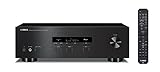
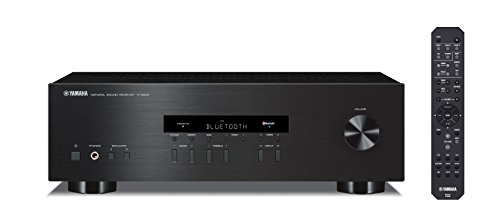
- 3. YAMAHA R-S202BL Stereo Receiver — Most versatile
- 4. Donner Stereo Receivers MAMP6 — Best minimal setup
- 5. Pyle Home Stereo Receiver with Bluetooth PDA77BU — Best upgrade
- 6. Donner Stereo Receivers Home Audio Amplifier MAMP5 — Best for pros
- 7. WOOPKER AK45Pro Stereo Audio Amplifier — Best budget pick
- Do you need a receiver or just an amplifier?
- What more money buys in home stereo receivers
- What the listings do not tell you
- The verdict
- FAQ
The best home stereo receivers start with Sony's STRDH190, because it is the only pick here that pairs a phono input with 100 watts x 2 into 8 ohms and A/B switching for four speakers. If your system runs through a television instead of a turntable, the Yamaha RX300A is the better buy, since it handles 4K120/8K60 HDMI and Dolby Atmos. This roundup is not for anyone shopping for a wireless multiroom speaker or a soundbar. Those replace a receiver rather than feeding one. Everything below assumes you own passive speakers, or are about to, and need something to drive them.
Best home stereo receivers at a glance
| Pick | Power (claimed) | Key inputs | Price |
|---|---|---|---|
Best overall Sony STRDH190 |
100W x 2 at 8 ohms | Phono, 4x RCA 3.5mm, Bluetooth |
Check Price |
Best premium Yamaha RX300A |
5.2 channels | HDMI 4K120/8K60 eARC, Bluetooth |
Check Price |
Most versatile Yamaha R-S202BL |
2 speaker systems | FM/AM, Bluetooth Headphone out |
Check Price |
Best minimal setup Donner MAMP6 |
25W x 6 RMS claim | Optical, coaxial 2 mic, USB, FM |
Check Price |
Best upgrade Pyle PDA77BU |
800W peak claim | 2 mic, USB, SD FM, RCA in/out |
Check Price |
Best for pros Donner MAMP5 |
25W x 4 RMS claim | Optical, coaxial 2 mic, USB, FM |
Check Price |
Best budget pick WOOPKER AK45Pro |
50W x 2 RMS claim | Bluetooth 5.0 USB, SD, mic |
Check Price |




How I screened these best home stereo receivers
I started with the published specification sheets and treated the power numbers with suspicion. Here's why. Two of these listings advertise 1000W peak. One advertises 800W peak. Peak power is a marketing figure, not a continuous rating, and the same Donner listings quote 25W x 6 and 25W x 4 RMS in the same breath. So the screening ran on things that can be compared honestly.
Four filters did the work:
- Does it publish a continuous power figure or a channel count? Sony states 100 watts x 2 at 8 ohms and 1 kHz. Yamaha's RX300A states 5.2 channels. Those are checkable claims.
- What can you physically plug in? A phono input, an optical input and an HDMI input each unlock a different source. I counted them rather than weighing them.
- Is there a stated warranty? Six of the seven list one. The Pyle PDA77BU does not.
- Will it fit the shelf? Widths here run from 5.43 in to 17.1 in, and depth from 7.09 in to 17.1 in. That gap decides more purchases than sound quality does.
What got cut: anything where the only published spec was a peak wattage and a colour. Anything under 2 lb that claimed triple-digit continuous power. The seven that survived all publish weight, dimensions and a model number, and six publish warranty terms.
One note on the search term. "Home stereo receivers" pulls in true receivers with a radio tuner and integrated amplifiers without one, and Amazon's results here mix both. I have flagged which is which in every section below, because the difference matters if you want FM.
Watts or inputs: what actually decides it?
Most guides to home stereo receivers rank by wattage. That is the wrong first question, and the numbers in this set show why. The WOOPKER AK45Pro claims 400W+400W peak alongside 50W x 2 RMS. Those are two figures for the same amplifier, and only the second one means anything in a living room. Sony's 100 watts x 2 into 8 ohms at 1 kHz is a narrower, more honest claim.
Inputs decide it. Work backwards from what you own:
- A turntable with no built-in preamp needs a phono input. Only the Sony STRDH190 lists one. Nothing else here does.
- A television needs HDMI with eARC or an optical input. The Yamaha RX300A lists HDMI eARC/ARC; the two Donners and the Pyle list optical and coaxial digital inputs.
- FM radio needs a tuner. The Yamaha R-S202BL claims 40 station FM/AM presets. Both Donners and the Pyle claim FM only, no AM.
- A microphone needs a mic jack with its own level control. Four picks here have one; the two Yamahas and the Sony do not.
Speaker impedance is the other spec people skip. Sony's listing specifies 6 to 16 ohms. If your speakers are rated at 4 ohms, that is a compatibility question worth resolving before you buy, not after.
1. Sony STRDH190 2-ch Home Stereo Receiver with Phono Inputs — Best overall
The only pick here with a phono input, and the only one rating its power into a stated impedance at a stated frequency.
Best for: turntable owners running two pairs of passive speakers Skip it if: you need HDMI or surround decoding
Two specifics separate the STRDH190 from the rest of this set. First, the phono input. Every other pick here would need a separate phono preamp between your turntable and the receiver, which is an extra box, an extra cable and an extra power outlet. Second, the power claim is written properly: 100 watts x 2 at 8 ohms, 1 kHz, with speaker impedance stated as 6 to 16 ohms. That is a spec you can match against your speakers.
The input list is generous for a two-channel box: phono, four stereo RCA inputs, a 3.5 mm input, a stereo RCA output and Bluetooth. A/B switching drives up to four speakers, all at once or as two zones, which covers a living room plus a kitchen pair off the same amplifier.
It is the heaviest pick here at 17.1 lb, and at 5.2 x 11 x 17 in it needs real shelf depth. Sony gives it a 1 year warranty, and the model dates from 2018. What it gives up against the Yamaha RX300A is video entirely. No HDMI, no Atmos, no room correction. This is a music amplifier that happens to have a tuner.
Pros:
- Only pick here with a phono input
- 100 watts x 2 at 8 ohms, properly stated
- Speaker impedance range published as 6–16 ohms
- Four speakers with A/B zone switching
- Four stereo RCA inputs plus 3.5 mm
Cons:
- No HDMI, so it cannot switch video sources
- Heaviest and deepest box in this set at 17.1 lb
- Only 1 year of warranty against the Yamaha RX300A's 2
- Premium price position with no digital optical input
2. Yamaha RX300A 5.2-Channel Home Theater AV Receiver — Best premium
The only pick that switches 8K video and decodes surround, and the only one with a 2 year warranty.

Best for: a TV-first living room that needs 8K HDMI switching Skip it if: you only ever play music from a turntable or phone
This is the outlier. Where the other six move stereo signals around, the RX300A is a 5.2-channel AV receiver, and Yamaha's listing claims Dolby Atmos, DTS Virtual:X, Dolby Vision and HDR10+ passthrough, 4K/120 and 8K/60 video support, and HDMI eARC/ARC. It also ships with a setup microphone for room correction, which measures your room and adjusts the speaker output automatically. No other pick here includes that.
The warranty is the quiet advantage: 2 years limited, double what everything else in this set publishes. It carries a 2026 release date, so it is the newest design here.
At 16.8 lb and 6.13 x 12.5 x 17.1 in it is the tallest pick, and the extra height is the giveaway that there are five amplifier channels inside rather than two. Bluetooth Multipoint is listed for wireless streaming.
The trade-off against the Sony is sharp and worth being honest about. There is no phono input on this listing, so a turntable still needs its own preamp. It also sits at the top price position in this set, and if your speakers are a single stereo pair, you are paying for three amplifier channels and a video switcher you will never connect.
Pros:
- 2 year limited warranty, longest here
- Claims 4K120/8K60 HDMI with eARC/ARC
- Dolby Atmos and DTS Virtual:X decoding
- Setup microphone for room correction included
- Newest design in this set, 2026 release
Cons:
- Most expensive pick in this roundup
- No phono input for a turntable
- Tallest chassis at 6.13 in, needs a deep shelf
- Three of its five channels go unused in a stereo setup
3. YAMAHA R-S202BL Stereo Receiver — Most versatile
Two speaker systems, a headphone jack and 40 FM/AM presets in the lightest full-width chassis here.
Best for: radio listeners who want two speaker systems and headphones Skip it if: you need a phono input for a turntable
The R-S202BL is the pick for anyone whose listening is split between radio, Bluetooth and headphones. Yamaha claims 40 station FM/AM preset tuning, and it is the only pick here that lists AM alongside FM. Frequency response is published as 10Hz to 100kHz, and input sensitivity for CD as 500 mV into 47k ohms, which is more electrical detail than most of this field publishes at all.
A speaker selector handles two systems with terminals for both, so like the Sony it can run a second pair in another room. There is a dedicated headphone terminal, which the Donners and the WOOPKER do not list. Auto power standby is included, and the fascia is brushed aluminium.
At 14.8 lb it is the lightest of the three full-width receivers, though its 17.1 in depth matches the Yamaha RX300A. Warranty is 1 year manufacturer.
Two gaps matter. There is no phono input, so a turntable needs an outboard preamp. And the listing publishes no continuous power figure at all, which is the one number a shopper comparing it against the Sony's 100 watts x 2 would want. It also sits at the second-highest price position here while offering fewer inputs than the Sony below it.
Pros:
- Only pick listing AM as well as FM
- 40 station FM/AM preset memory
- Frequency response published as 10Hz–100kHz
- Dedicated headphone terminal
- Speaker selector and terminals for two systems
Cons:
- No published power output figure
- No phono input for a turntable
- No optical or coaxial digital input
- Second-highest price position for fewer inputs than the Sony
- Slowest seller among the two Yamahas here
4. Donner Stereo Receivers MAMP6 — Best minimal setup
Six amplifier channels and both optical and coaxial digital inputs, in a box that hides most of its complexity behind a remote.

Best for: karaoke nights across six speakers in two rooms Skip it if: you want a discreet box with no mic controls
The MAMP6 is the widest input list in this roundup. Donner lists Bluetooth 5.3, USB up to 64 GB, two pairs of RCA, two mic inputs, AUX in, FM radio, and both optical and coaxial digital inputs. That optical connection is the one to note: it lets a television feed this amplifier directly without HDMI, which neither Yamaha stereo model nor the Sony can do.
Six channels at a claimed 25W x 6 RMS is the other differentiator. It means three stereo pairs, or a main pair plus two extension pairs, from a single chassis. The remote handles treble, midrange, bass, echo and talkover independently, and FM stations can be entered by number rather than scanned.
It measures 3.86 x 15 x 9.76 in and weighs 12 lb, so it is short but wide. Warranty is 1 year.
The honest reckoning: the headline 1000W peak figure sits next to a 25W x 6 RMS claim, and 25W per channel is modest. Against the Sony, you get more inputs and fewer watts. There is no phono input, no headphone jack listed, and the mic and echo controls make the front panel busier than a music-only listener needs.
Pros:
- Optical and coaxial digital inputs both listed
- Six amplifier channels for three stereo pairs
- Bluetooth 5.3, newest wireless version here
- Remote controls treble, midrange, bass, echo, talkover
- FM stations selectable by entering numbers
Cons:
- Claimed 25W x 6 RMS is modest per channel
- Headline 1000W peak figure is not a continuous rating
- No phono input and no listed headphone output
- 15 in wide despite the short 3.86 in height
5. Pyle Home Stereo Receiver with Bluetooth PDA77BU — Best upgrade
Four channels with reverb and delay on two 1/4-inch mic inputs, and the shallowest full-size chassis here at 9.8 in deep.

Best for: party hosts who want reverb and delay on two mics Skip it if: you want a published warranty on paper
The PDA77BU is built around hosting. Two 1/4 inch microphone jacks each get independent control, and the listing claims reverb and delay effects alongside mic volume. That effects pair is specific to this pick. The Donners list echo and talkover; only Pyle names reverb and delay separately.
Sources cover USB-A with an onboard MP3 player, SD card, FM radio and RCA in and out, with Bluetooth 5.0 for streaming. A digital LED display and front panel controls handle everything without reaching for a remote.
Dimensions are 3.5 x 13.8 x 9.8 in, the shortest height of any pick here, at 10.9 lb. It is the second-cheapest of the seven and was released in 2023.
Now the problems. This is the only pick in the set with no published warranty term, which is a real gap when six competitors state one. The 800W peak claim comes with no RMS figure attached anywhere in the listing, so there is no honest way to compare its output against the Sony's 100 watts x 2 or the Donners' 25W per channel. It is also the slowest-moving pick among the entry-priced options here, and there is no optical or coaxial input, so a modern television has no clean digital route in.
Pros:
- Reverb and delay on the mic channels
- Two 1/4 inch mic jacks with independent controls
- Shortest chassis here at 3.5 in tall
- USB-A with onboard MP3 playback
- Second-cheapest pick in this set
Cons:
- No published warranty term at all
- 800W peak claim with no RMS figure given
- No optical or coaxial digital input
- Bluetooth 5.0 rather than the 5.3 on both Donners
6. Donner Stereo Receivers Home Audio Amplifier MAMP5 — Best for pros
The lightest four-channel option here at 9.08 lb, with the same digital inputs as its six-channel sibling.

Best for: hosting duty in a rented room, carried in and out Skip it if: you need more than four speaker channels
The MAMP5 is the MAMP6 with two fewer channels and less mass. Donner claims 25W x 4 RMS under the same 1000W peak headline, with Bluetooth 5.3, USB up to 64 GB, two pairs of RCA, two mic inputs, AUX in, FM radio, and optical and coaxial digital inputs.
Weight is the reason to pick it over its sibling: 9.08 lb against 12 lb, in a 3.9 x 13.7 x 9.8 in body. If the amplifier travels between a garage, a rented hall and a living room, nearly 3 lb less matters more than two extra channels you were not going to wire. Dual 1/4 inch mic jacks and a talkover function that ducks the music under a voice make it usable for announcements as well as karaoke.
It sits mid-range for price in this set, above both the Pyle and the six-channel MAMP6, which is the odd part. You pay more than the MAMP6 costs while getting two channels fewer, and the trade is portability alone. Warranty is 1 year, and the listing carries a 2026 release date.
Pros:
- Lightest multi-channel pick at 9.08 lb
- Optical and coaxial digital inputs included
- Bluetooth 5.3 with dual 1/4 inch mic jacks
- Talkover function ducks music for announcements
- Independent treble, midrange and bass on the remote
Cons:
- Priced above the six-channel MAMP6 for four channels
- Claimed 25W x 4 RMS is modest per channel
- Slowest seller of all seven picks here
- No phono input and no listed headphone output
7. WOOPKER AK45Pro Stereo Audio Amplifier — Best budget pick
The cheapest and smallest pick by a wide margin, at 1.96 lb and 2.56 in tall.

Best for: a desktop or bookshelf pair in a small room Skip it if: you want a remote or a full-width component
Size is the entire argument. At 2.56 x 5.43 x 7.09 in and 1.96 lb, the AK45Pro is roughly a tenth the weight of the Sony and fits on a desk shelf where no other pick here would sit. It is also the cheapest of the seven.
WOOPKER claims 50W x 2 RMS under a 400W+400W peak headline, with bass, treble, master volume and microphone volume on separate knobs. Sources include Bluetooth 5.0, USB stick, SD card and wired connections from a phone, laptop or projector with AV audio. Warranty is 1 year.
For a bedroom pair of bookshelf speakers or a desktop setup, that is a complete package in a footprint smaller than a hardback book. The mic volume knob means it doubles as a small PA if needed.
The limits are obvious once you look past the size. There is no remote listed, so every adjustment happens at the box. No optical, no coaxial, no FM tuner, so it is an amplifier rather than a receiver in the strict sense. And it sells more slowly than the Sony despite costing far less, which suggests buyers reaching for this category usually want the bigger chassis. Against the Sony, you trade the phono input, four-speaker switching and 100 watts x 2 for a box you can hold in one hand.
Pros:
- Cheapest pick in this roundup
- Smallest footprint at 2.56 x 5.43 x 7.09 in
- Only 1.96 lb, fits a desk or bookshelf
- Separate bass, treble and master volume knobs
- Microphone volume control included
Cons:
- No remote control listed
- No FM tuner, optical or coaxial input
- Only one seller lists it
- 50W x 2 RMS claim, lowest stated output here
- Sells more slowly than the pricier Sony
Do you need a receiver or just an amplifier?
The word receiver technically means an amplifier with a radio tuner built in. Amazon's category listings blur that line, and this set proves it. Two of these products sit under Amplifiers in the category structure rather than Receivers, and one of them, the WOOPKER, has no tuner at all.
Here is how to tell which you need:
- You want FM or AM radio. Get a real receiver. The Yamaha R-S202BL claims 40 FM/AM presets; the Sony, both Donners and the Pyle list tuners too.
- Every source you own is digital or streamed. An amplifier is enough. Bluetooth and a USB port cover most of it.
- You want to switch between three or four sources without unplugging cables. Count the inputs. Sony's four stereo RCA inputs plus phono plus 3.5 mm is the widest analogue selection here.
- Your television is the hub. You need HDMI or optical. Only the Yamaha RX300A has HDMI; the Donners and Pyle have optical.
One thing to watch on the search results for the best home stereo receivers: the term pulls in karaoke amplifiers with mic jacks and echo effects that no traditional stereo listener wants on the front panel. Four of these seven have mic inputs. If a clean two-knob fascia matters to you, that narrows the field to three fast.
What more money buys in home stereo receivers
Price position in this set does not track power. It tracks build and connectivity.
At the bottom, the WOOPKER and the Pyle give you Bluetooth, USB, SD and a mic input in a light chassis. What you give up is any published continuous power rating you can trust, and in the Pyle's case, any warranty at all.
In the middle, the two Donners add optical and coaxial digital inputs, Bluetooth 5.3, a multifunction remote and independent midrange control. That optical input is the single most useful thing money buys at this tier, because it connects a television without HDMI.
At the top, the two Yamahas and the Sony buy you weight, a stated warranty, proper full-width chassis at 17 in deep, and published electrical specifications. Sony's 100 watts x 2 at 8 ohms with a 6–16 ohm impedance range is the kind of figure the cheaper picks simply do not publish. Yamaha's RX300A adds 2 years of warranty, video switching and room correction.
The pattern is clear. Cheap gets you inputs. Expensive gets you documented performance and a longer warranty. Nobody here sells you more honest watts for more money.
What the listings do not tell you
Three gaps run through every product page in this set, and none of them appear in the specifications.
Speaker wire connections. Only the Sony publishes its impedance range at 6 to 16 ohms. If your speakers are 4 ohm, check the manual before wiring anything, and check it for every other pick here too, because the number is absent from their listings.
Whether peak power means anything. Four listings lead with a peak figure: 1000W, 1000W, 800W, 400W+400W. Two of those four also state RMS, at 25W and 50W per channel. Treat peak as a headline and RMS as the number.
Physical fit. Depth is the trap. The Sony and both Yamahas run 17 to 17.1 in deep, which will overhang a standard 16 in media shelf and needs clearance behind for cables. The Pyle, both Donners and the WOOPKER run 7.09 to 9.8 in deep. Measure your shelf before you decide.
There is a fourth gap worth naming. None of these listings tells you how the Bluetooth behaves when a second phone tries to connect, except the Yamaha RX300A, which specifies Bluetooth Multipoint. That is the only pairing detail published anywhere in this group.
The verdict
The Sony STRDH190 is the pick I'd start with for most people shopping the best home stereo receivers. It publishes its power honestly at 100 watts x 2 into 8 ohms, states a 6–16 ohm speaker range, carries the only phono input in the set, and switches four speakers across two zones. For a music system built on speakers and a turntable, nothing else here matches that combination.
Two conditions flip it. First, if your system centres on a television, the Yamaha RX300A wins outright, because it is the only pick with HDMI at 4K120/8K60, Dolby Atmos decoding, an included room correction microphone and a 2 year warranty. The Sony has no video path at all. Second, if you need microphones with echo or talkover, none of the Yamahas or the Sony will do it, and the Donner MAMP6 becomes the answer with six channels, two mic jacks and both optical and coaxial digital inputs.
A third condition is space. Sony, at 5.2 x 11 x 17 in and 17.1 lb, needs a real component shelf. The WOOPKER AK45Pro at 2.56 x 5.43 x 7.09 in and 1.96 lb goes anywhere, and for a desk or a small bedroom that trade is worth losing the phono input over.
FAQ
Are expensive home stereo receivers worth it over cheap amplifiers?
Expensive home stereo receivers are worth it when you need documented specifications and a longer warranty. The Yamaha RX300A publishes a 2 year limited warranty, HDMI at 4K120/8K60 and room correction. The cheapest pick here, the WOOPKER AK45Pro, publishes 1 year and a 50W x 2 RMS claim. Pay more for verifiable capability, not for a bigger peak wattage headline.
What is the best home stereo receiver for a turntable?
The best home stereo receiver for a turntable in this set is the Sony STRDH190, because it is the only one of the seven listing a phono input. Every other pick, including both Yamahas, would need a separate phono preamp between the turntable and the amplifier. That is an extra box, an extra cable and an extra outlet to find.
Does a receiver need to match my speaker impedance?
A receiver needs to match your speaker impedance or you risk overworking the amplifier. Sony's STRDH190 publishes a 6 to 16 ohm range, which is the only impedance specification stated across these seven listings. If your speakers are rated 4 ohm, check the manual for whichever pick you choose before connecting anything, since the other listings stay silent on it.
Sony STRDH190 or Yamaha RX300A: which should I buy?
Sony STRDH190 or Yamaha RX300A comes down to whether video matters. Choose the Sony for music: phono input, 100 watts x 2 at 8 ohms, four-speaker A/B switching. Choose the Yamaha RX300A for a television system: 5.2 channels, Dolby Atmos, 4K120/8K60 HDMI, eARC and a 2 year warranty. The Yamaha is the more expensive of the two.
What mistake do first-time receiver buyers make?
The mistake first-time receiver buyers make is shopping by peak wattage. Peak figures here run to 1000W while the same listings quote 25W per channel RMS. Depth is the other trap: the Sony and both Yamahas measure 17 to 17.1 in deep and will overhang a standard media shelf, while the Pyle and Donners stay under 10 in.
Start by counting what you need to plug in, then measure the shelf. Those two steps eliminate four or five of these picks in about a minute, and whichever survives is your answer. For most people building a music system around real speakers, that will be the Sony STRDH190, and the reason is narrower than it first appears: it is the only box here that will take a turntable straight in without a second device sitting behind it. Fewer components means fewer cables, fewer power outlets and one less thing to troubleshoot when the sound stops.