Best EV Home Charging Station: ChargePoint Leads

Six Level 2 chargers compared on amperage, connector type and install path, with the ChargePoint HomeFlex as the default pick and clear reasons to choose otherwise.

By Frederick CameronUpdated 15 min read
On this page
- Best EV home charging station at a glance
- How I narrowed six Level 2 chargers
- 1. ChargePoint HomeFlex Level 2 EV Charger J1772 — Best overall
- 2. EVIQO Level 2 EV Charger NACS 48A — Best minimal setup
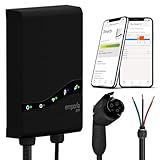
- 3. EMPORIA Pro Level 2 EV Charger with PowerSmart — Best for pros
- 4. EVIQO Level 2 EV Charger J1772 40A NEMA 14-50 — Best warranty
- 5. EVDANCE Level 2 EV Charger for Tesla — Best upgrade
- 6. AIMILER Level 2 Electric Vehicle Charger — Best budget pick
- Amperage is the number that actually decides it
- Plug-in or hardwired: which install path fits your garage?
- J1772 or NACS: does the connector still matter?
- What the listings do not tell you about installation
- The verdict
- FAQ
The best EV home charging station for most drivers is the ChargePoint HomeFlex Level 2 EV Charger J1772, because it pairs a plug-in NEMA 14-50 install with a mature app and a 3-year parts warranty. If you drive a Tesla and want to skip adapters, the EVIQO NACS 48A hardwired unit is the better buy, since it goes to 48A and speaks NACS natively. Every pick here charges at 240V, and the deciding numbers below are amperage, connector and install path.
Best EV home charging station at a glance
| Pick | Max amperage | Connector | Install | Price |
|---|---|---|---|---|
Best overall ChargePoint HomeFlex |
Up to 45 mi/hr claim | J1772 | NEMA 14-50 plug | Check Price |
Best minimal setup EVIQO NACS 48A |
48A | NACS (Tesla) | Hardwired | Check Price |
Best for pros EMPORIA Pro |
48A | J1772 | Hardwired | Check Price |
Best warranty EVIQO J1772 40A |
40A | J1772 | NEMA 14-50 plug | Check Price |
Best upgrade EVDANCE 40A Tesla |
40A / 9.6kW claim | NACS (Tesla) | NEMA 14-50 plug | Check Price |
Best budget pick AIMILER 32A |
32A (16-32A adj.) | J1772 | NEMA 14-50 plug | Check Price |




How I narrowed six Level 2 chargers
I started with the Level 2 listings in Amazon's Electric Vehicle Charging Equipment category, then cut anything without a published amperage, a stated connector type or a clear install method. That is the shortest honest screen for this category. A charger that will not tell you whether it hardwires or plugs in is a charger that will not survive an electrician's first question.
From there I compared the picks on five points:
- Maximum amperage, since that sets your ceiling for miles per hour.
- Connector type, J1772 or NACS, since that decides whether you need an adapter.
- Install path, plug-in NEMA 14-50 or hardwired.
- Published warranty length.
- Price position within this set of six, from entry to premium.
Three picks were cut in the process. Two had no stated warranty in the listing. One did not clarify whether it hardwired or shipped with a plug. Both are questions your electrician will ask before the quote lands. What remained were six chargers spanning 32A to 48A, both connectors, and both install types, which is exactly the spread this guide needed.
1. ChargePoint HomeFlex Level 2 EV Charger J1772 — Best overall
The ChargePoint HomeFlex is the safest default here: a plug-in J1772 charger from an established network, backed by a 3-year parts warranty.
Best for: most J1772 drivers who want a plug-in install and a mature app Skip it if: you drive a Tesla and do not want a NACS adapter
This is the one buyers choose most often in this set, and looking at the specification sheet it is easy to see why. The HomeFlex is a 2023 model with a NEMA 14-50 plug, a black housing measuring 7.07 x 11.2 x 7.06 in, and a shipping weight of 13.8 lb. ChargePoint says the unit charges 9x faster than a 120V outlet and delivers up to 45 mi/hr, dependent on your vehicle. It is UL-certified and rated for indoor or outdoor install with a cold-resistant cable. The app ties into ChargePoint's public network, which the listing puts at 274k+ stations across North America and Europe, so the same account tracks garage sessions and road-trip stops.
Two trade-offs to name. The HomeFlex is the most expensive pick here, so a Tesla driver who does not need a public-network app is paying for features they will not use. It is also J1772-only, which means an adapter for a NACS car.
Pros:
- 3-year parts warranty
- Up to 45 mi/hr charging claim
- Cold-resistant cable rated for outdoor install
- Ties into ChargePoint's 274k+ station network
- UL-certified, indoor or outdoor rated
Cons:
- The most expensive pick in this set
- J1772 only, so Tesla drivers need an adapter
- Only two sellers listed, which can affect availability
2. EVIQO Level 2 EV Charger NACS 48A — Best minimal setup
If you drive a Tesla, this is the shortest path from parking spot to full overnight: 48A, native NACS, hardwired.

Best for: Tesla owners who want a hardwired 48A NACS charger and no adapter Skip it if: you need a plug-in install you can uninstall later
The EVIQO NACS unit is the only 48A NACS charger in this roundup, and the only NACS pick that hardwires. That combination matters. A 48A hardwired install pushes 20% more current than a 40A plug-in setup on the same 240V circuit, and the built-in Tesla-style plug means no J1772-to-NACS adapter dangling from the port. The housing measures 9.45 x 4 x 9.45 in in gray, and EVIQO publishes a 3-year warranty. The listing describes an IP66 / NEMA 4 sealed enclosure and independent certifications including UL, ETL, FCC and Energy Star. There is a phone app for start, stop and scheduling, plus a glow-in-the-dark holster for the plug.
The trade-off is real. Hardwiring means an electrician wires the charger directly into your panel, so this is not a unit you unplug and take to a new house without repeating that work. Two sellers list it, which is fine but not deep.
Pros:
- 48A on a native NACS connector
- 3-year warranty
- IP66 / NEMA 4 sealed enclosure claim
- No adapter needed for Tesla Model S, 3, X or Y
- App control with scheduling
Cons:
- Hardwired, so an electrician is required
- Not portable between homes without rework
- NACS only, so non-Tesla drivers need an adapter
3. EMPORIA Pro Level 2 EV Charger with PowerSmart — Best for pros
The Emporia Pro is the pick for a house whose panel is already crowded, thanks to load-management hardware bundled with the charger.

Best for: homes with tight panel capacity that need load management Skip it if: you want a simple plug-in charger with no extra energy monitor
Emporia's angle is the one thing a spec sheet rarely surfaces: whether your electrical service can actually deliver 48A without a panel upgrade. Emporia says its PowerSmart feature lets the Pro charge at maximum speed without an upgrade by watching total household draw and throttling when the rest of the house is loaded. The included Emporia Vue energy monitor is what makes that possible, and it doubles as a whole-home usage tracker. The charger itself measures 12.3 x 3 x 8.25 in, ships in black, offers a hardwired or NEMA 14-50 install path per the listing, and carries a 3-year warranty. Cable length is 25 ft.
The trade-off is scope. If your panel already has clear headroom for a 50A or 60A circuit, the PowerSmart hardware is doing work you do not need. This is a second-most-expensive pick here, and the extra cost buys the load-management story, not raw charging speed.
Pros:
- 48A ceiling on a J1772 connector
- Includes Emporia Vue energy monitor
- Hardwired or NEMA 14-50 install claimed
- 3-year warranty with US-based support
- 25 ft cable
Cons:
- Load management is wasted if your panel has headroom
- Second-highest price position in this set
- Hardwired install is the default configuration
4. EVIQO Level 2 EV Charger J1772 40A NEMA 14-50 — Best warranty
A 40A J1772 charger with a plug-in install, a sealed weatherproof body and a 3-year warranty in the mid price band.

Best for: non-Tesla drivers who want a 40A plug-in charger with a weatherproof body Skip it if: you need more than 40A or a NACS connector
This is the J1772 twin of EVIQO's NACS unit, and it swaps hardwiring for a NEMA 14-50 plug. It runs up to 40A on a dedicated 50A circuit, and the listing insists on a range-style 14-50 outlet rather than a dryer receptacle, which is the mistake buyers make most often here. The 3-year manufacturer warranty is matched only by the ChargePoint and both Emporia and EVIQO NACS picks. EVIQO describes the same IP66 / NEMA 4 housing as its NACS sibling, along with UL, ETL, FCC and Energy Star listings, and the glow-in-the-dark holster is a small thing that turns out to matter in an unlit garage.
The set-level trade-off is amperage. Two picks here reach 48A. This one stops at 40A, which is still enough to fully charge most EVs overnight per the listing, but not the ceiling of the category. Only one seller lists it.
Pros:
- 3-year manufacturer warranty
- IP66 / NEMA 4 weatherproof housing claim
- Plug-in NEMA 14-50 install
- App control from 6-40A
- UL, ETL, FCC and Energy Star listings
Cons:
- 40A ceiling, below the 48A picks
- Only one seller listed
- J1772 only, so Tesla drivers need an adapter
5. EVDANCE Level 2 EV Charger for Tesla — Best upgrade
A 40A NACS plug-in charger aimed at Tesla drivers stepping up from the mobile connector, at the second-cheapest price position in this set.

Best for: Tesla drivers upgrading from the mobile connector on a budget Skip it if: you want more than a 1-year warranty
The EVDANCE is the cheapest NACS charger here and the only NACS pick that plugs in. EVDANCE claims 8x faster charging than 120V, up to 40A and 9.6kW, with adjustable current in six steps from 10A to 40A. The 25 ft cable matches the ChargePoint and Emporia cables in reach, which matters more than it sounds when your outlet and your charge port are on opposite sides of the parking bay. A 1-12 hour delayed-start timer lets you push charging to off-peak windows without an app. The unit weighs 12 lb and ships in black.
The catch is the warranty. EVDANCE publishes a 1-year warranty, one third of what every other pick here offers. For a device wired into a 240V circuit and sitting through winters, that is a real trade-off, and it is why this pick sits as the upgrade path rather than the outright NACS default. The slowest seller of the six by category rank.
Pros:
- Native NACS plug for all Tesla models per listing
- 40A / 9.6kW ceiling claim
- Six-step current adjustment from 10A to 40A
- 1-12 hour delayed-start timer
- Second-cheapest position in this set
Cons:
- 1-year warranty, shortest in this set
- The slowest seller of the six here
- Plug-in only, no hardwired option
6. AIMILER Level 2 Electric Vehicle Charger — Best budget pick
The cheapest pick in this set, a 32A adjustable J1772 charger with a 25 ft cable and a 3-year warranty.

Best for: shoppers who want a 32A plug-in charger at the lowest position here Skip it if: you want a 40A or higher charger for faster overnight fills
The AIMILER sits at the entry price band and gives up amperage to get there. It caps at 32A and adjusts down to 16A in software, and AIMILER says it needs a 20A to 40A circuit, drawing 24A on a 30A breaker. Peak throughput is 7.68 kWh per the listing, which is enough to top up most commuter EVs overnight but not enough to fully refill a large-battery car from empty. The charger ships with a NEMA 14-50 plug and a WiFi app for scheduling, off-peak windows and fully-charged notifications, plus a small touch screen showing amperage, voltage and delay time. The 3-year warranty matches the more expensive picks.
The trade-off is speed. On the same 240V circuit, 32A moves 33% less current than a 40A charger and 50% less than a 48A hardwired unit. Only one seller lists it, and it is the slowest of the J1772 picks here by category rank.
Pros:
- The cheapest of the six here
- 3-year warranty
- Adjustable 16-32A output
- 25 ft cable and WiFi app scheduling
- Plug-in NEMA 14-50 install
Cons:
- 32A ceiling, lowest of any pick here
- Only one seller listed
- Slower overnight fills for large-battery EVs
Amperage is the number that actually decides it
Most EV charger guides open with connector type. That is the wrong lead. Every pick in this roundup runs at 240V, so the number that actually decides miles per hour of charging is the amperage the charger delivers into your car. The four amperage points in this set are 32A, 40A, 48A and the ChargePoint's mi/hr claim. Everything else follows from that.
Here is the trick. Your car can only accept what its onboard AC charger will pass, and most EVs cap between 32A and 48A. If your car tops out at 32A, a 48A charger is a 32A charger with a bigger cable. If your car accepts 48A, a 32A charger is throttling you. Check the vehicle's spec sheet for onboard AC charging rate before you buy hardware. The AIMILER at 32A is a fine match for a car that accepts no more; it is a bottleneck for one that accepts 48A.
Two other numbers matter less than the marketing suggests. Cable length is real, but every plug-in pick here ships at least 25 ft. WiFi features are real, but every pick here has an app. Amperage is what separates them.
Plug-in or hardwired: which install path fits your garage?
Four picks here plug into a NEMA 14-50 outlet. Two hardwire directly into the panel. The Emporia lists both paths. That split changes what your electrician quotes and what you can move later.
Plug-in with NEMA 14-50 is the flexible choice. You get a proper 240V outlet installed on a dedicated circuit, and the charger cord plugs into it. If you move, you unplug and take the charger. If it fails, you swap it without an electrician. The downside is that a plug-in install caps at 40A in practice, because a 50A circuit derates to 40A continuous for the outlet.
Hardwired is the higher-ceiling choice. The charger wires directly into the panel with no receptacle in between, which lets a 48A charger draw its full 48A on a 60A circuit. That is the extra 20% of speed that the EVIQO NACS and Emporia Pro unlock. You give up portability. If you move, the charger stays or an electrician removes it.
A rule of thumb: if you want 48A, you hardwire. If you want 40A or less, plug in. If you rent, plug in every time.
J1772 or NACS: does the connector still matter?
Yes, but less than it did a year ago. Four picks here ship J1772. Two ship NACS, the Tesla-style plug now being adopted across the industry. The question is which side of that transition you sit on.
If your car ships with a J1772 port, which covers Ford, GM pre-transition, Hyundai, Kia, Nissan, BMW, Volkswagen, Audi, Rivian and Lucid per the EVIQO listing, a J1772 charger is the direct fit. The ChargePoint, both EVIQOs J1772 variants, the Emporia Pro and the AIMILER all speak that language.
If you drive a Tesla, the built-in NACS ports on the EVIQO NACS 48A and the EVDANCE remove the adapter step entirely. That is a small daily convenience: one less thing to plug and unplug, one less thing to lose in the garage. You can still buy a J1772 charger and use a NACS adapter, and Tesla ships one, but a native NACS charger is cleaner.
The wrong move is buying a NACS charger for a J1772 car on the theory the market will shift under you. That works in reverse, at charging stations. At home, buy the connector your car ships with today.
What the listings do not tell you about installation
Amazon listings sell hardware. They do not sell the panel work, the permit or the drywall. Three costs land after checkout and none of them are on the listing.
- The circuit itself. A dedicated 50A circuit for a plug-in 40A charger, or a 60A circuit for a 48A hardwired one, is often a longer wire run than buyers expect. If the panel sits on the opposite side of the house from the garage, the wire alone is a real line on the quote.
- The outlet, if you plug in. The listings insist on a NEMA 14-50 range-style outlet, not a dryer outlet. That is one specific receptacle to buy, and the electrician will confirm before they wire it in.
- The permit and inspection. Most jurisdictions require both for a 240V circuit of this size. Your electrician handles it, but the fee is on your bill.
Ask for a quote before you buy the charger. If the panel is full or the run is long, that changes which install path is realistic, and it can flip the pick from a 48A hardwired charger to a 40A plug-in one.
The verdict
The ChargePoint HomeFlex is the best EV home charging station for most drivers here because it hits every point that matters: a NEMA 14-50 plug-in install that any electrician recognises on sight, a 3-year parts warranty, a mature app that also works with public charging on the ChargePoint network, and up to 45 mi/hr per the listing. It is the most expensive pick in this set, and it is the one buyers choose most often in this category. Those two facts point the same direction.
Two exceptions flip the recommendation. If you drive a Tesla and you have panel capacity, the EVIQO NACS 48A is the cleaner choice, because a native NACS connector plus 48A of hardwired current beats a J1772 charger with an adapter for a car you plan to keep. If your panel is already loaded and an upgrade would cost more than the charger itself, the Emporia Pro's PowerSmart hardware and included Vue energy monitor are worth the second-highest price position, because they let you skip that panel upgrade entirely.
Everything else is a trade-off in service of budget or specific fit.
FAQ
Is a Level 2 charger worth it over the mobile connector that came with the car?
A Level 2 charger is worth it if you drive more than about 30 miles a day or you park overnight on a schedule. The ChargePoint HomeFlex says it charges 9x faster than a 120V outlet at up to 45 mi/hr, dependent on the vehicle. A 120V mobile connector adds roughly 3-5 mi/hr, so a Level 2 unit turns a two-day charge into an overnight one for most commuters.
How much amperage do I actually need at home?
How much amperage you actually need depends on your car's onboard AC charger, not the wall unit. Most EVs cap between 32A and 48A. A 32A charger like the AIMILER fits smaller-battery commuter cars. A 40A plug-in charger like the ChargePoint HomeFlex or EVIQO J1772 40A fits most current EVs. Only cars that accept 48A benefit from the EVIQO NACS 48A or Emporia Pro.
Should I pick J1772 or NACS for my home charger?
Pick J1772 or NACS based on the port on your car today, not the industry transition. Ford, GM, Hyundai, Kia, Nissan, BMW, Audi, Rivian and Lucid ship with J1772, so the ChargePoint, both EVIQO J1772 models, Emporia Pro and AIMILER connect directly. Tesla ships NACS, and the EVIQO NACS 48A and EVDANCE remove the adapter step for Model S, 3, X and Y.
ChargePoint HomeFlex vs EVIQO NACS 48A: which is the better default?
ChargePoint HomeFlex vs EVIQO NACS 48A comes down to two things: your car's connector and your install appetite. The HomeFlex is J1772, plug-in and backed by the ChargePoint network across 274k+ stations. The EVIQO NACS 48A is native Tesla, hardwired and reaches 48A. Tesla drivers with panel room should choose the EVIQO. Everyone else should default to the HomeFlex.
What is the biggest mistake buyers make with a best EV home charging station purchase?
The biggest mistake buyers make with a best EV home charging station purchase is buying the charger before pricing the circuit. A 48A hardwired install needs a 60A dedicated circuit, and if your panel is full, the panel upgrade can cost more than the charger. Get an electrician's quote first. If the panel is tight, the Emporia Pro's PowerSmart hardware is designed for exactly that case.
Start with the electrician. Book a 20-minute visit, walk them from the panel to the parking spot, and get a written quote for both a 50A plug-in circuit and a 60A hardwired one. That single conversation will tell you more than any spec sheet, because it exposes whether 48A is realistic in your house or whether 40A is the honest ceiling. Then pick the charger. The ChargePoint HomeFlex is the safe default across most J1772 garages, the EVIQO NACS 48A is the shortest path for a Tesla with panel room, and the Emporia Pro is the answer when the panel says no.