Best 9.2 Atmos Receiver by Channel Count and Weight

Six Atmos receivers, only four of them actually 9.2-channel. Here's which one earns the top slot, which two are the wrong shape for this search, and the spec that separates them.

By Frederick CameronUpdated 16 min read
On this page
- Best 9.2 atmos receiver at a glance
- How I narrowed this field down to six
- Which of these are actually 9.2-channel?
- 1. Onkyo TX-NR7100 9.2-Channel THX Certified AV Receiver — Best overall
- 2. Yamaha RX-A6A AVENTAGE 9.2-Channel AV Receiver — Best premium
- 3. Sony STRAZ3000ES Premium ES 9.2 CH 8K A/V Receiver — Best upgrade
- 4. Onkyo TX-RZ50 9.2-Channel THX Certified AV Receiver — Best minimal setup
- 5. Denon AVR-X1700H 7.2 Channel AV Receiver — Best for pros
- 6. Yamaha RX300A 5.2-Channel Home Theater AV Receiver — Best budget pick
- Does a 9.2 Atmos receiver need nine speakers on day one?
- What extra weight and money actually buy
- How to read a receiver listing before you buy
- The verdict
- FAQ
The best 9.2 Atmos receiver is the Onkyo TX-NR7100, a 27.5 lb nine-channel unit with Dirac Live calibration and three HDMI outputs. If your install needs 11.2-channel processing and separate Zone 2, 3 and 4 feeds, the 41.2 lb Yamaha RX-A6A takes over. The deciding specification here isn't Atmos support, because all six of these decode it. It's how many amplified channels the chassis actually contains, and that number ranges from five to nine across this set. Two picks below are not 9.2 receivers at all, and I've flagged exactly which.
Best 9.2 atmos receiver at a glance
| Pick | Amplified channels | Weight | Price |
|---|---|---|---|
Best overall Onkyo TX-NR7100 |
9.2 | 27.5 lb | Check Price |
Best premium Yamaha RX-A6A AVENTAGE |
9.2 11.2 processing |
41.2 lb | Check Price |
Best upgrade Sony STRAZ3000ES |
9.2 120W claim |
32.8 lb | Check Price |
Best minimal setup Onkyo TX-RZ50 (Renewed) |
9.2 11.2 processing |
30.9 lb | Check Price |
Best for pros Denon AVR-X1700H |
7.2 | 19 lb | Check Price |
Best budget pick Yamaha RX300A |
5.2 | 16.8 lb | Check Price |


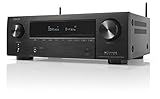

How I narrowed this field down to six
I weighted three criteria, in this order.
- Amplified channel count. A 9.2 chassis drives nine speakers without an external amp. Nothing else on the spec sheet substitutes for that.
- Published HDMI capability. Input and output counts, 8K and 4K/120 pass-through, VRR and ALLM. These determine whether a console and a projector can coexist behind the rack.
- Calibration system. Dirac Live, YPAO, DCAC. Room correction does more for perceived sound quality than another 20 watts.
Why that order? Because channel count is the one thing you cannot fix later without buying a second box. HDMI you can work around with a switcher. Calibration you can improve with a measurement mic and patience. Nine amplified channels you either bought or you didn't.
Two picks here fall short of nine channels: the Denon AVR-X1700H at 7.2 and the Yamaha RX300A at 5.2. They stay in because Amazon returns them for this search and because both decode Atmos, which is the other half of what shoppers want. I've labelled the gap in every section so nobody buys one expecting nine speaker terminals. Warranty length also split the field wider than I expected, from 90 days to three years.
Which of these are actually 9.2-channel?
Four of the six. Here's the honest breakdown of the set:
- Onkyo TX-NR7100 — nine channels of processing, per Onkyo's own description.
- Yamaha RX-A6A — 9.2-channel amplification with 11.2-channel processing, so two more channels are available if you add external amplification.
- Sony STRAZ3000ES — 9.2 channels, rated by Sony at 120W + 120W into 8 ohms at 1kHz, 2 channels driven, 0.9% THD.
- Onkyo TX-RZ50 — 9.2 channels with 11.2-channel processing listed.
- Denon AVR-X1700H — 7.2 channels. Denon lists 80W per channel.
- Yamaha RX300A — 5.2 channels.
That's the part of this search Amazon doesn't respect. Ask for a best 9.2 atmos receiver and you get 5.2 and 7.2 units mixed in, because Atmos and 8K are the words the listings share. The channel number lives in the model description, not in a filter.
The practical consequence is speaker layout. Nine amplified channels let you run 7.1.2 or 5.1.4. Seven channels get you 5.1.2 or 7.1 flat. Five channels mean Atmos arrives through virtualization rather than physical height speakers, which is a real effect but not the same one. Count the terminals you need before you count anything else.
1. Onkyo TX-NR7100 9.2-Channel THX Certified AV Receiver — Best overall
Nine amplified channels, three HDMI outputs and Dirac Live in a 27.5 lb chassis make this the most complete 9.2 Atmos receiver in the set.
Best for: a 5.1.4 or 7.1.2 layout with a projector and a console sharing the rack Skip it if: your rack is shorter than 17 inches wide
Three HDMI outputs is the specification that separates this from the rest of the mid-priced field. Onkyo states 8K/4K transfer at 40 Gbps and 4K/120Hz HDR pass-through with VRR, which covers a current console without a downstream switcher. If you run a TV in the living room and a projector on a drop screen, that third output stops being a luxury.
Dirac Live is the other differentiator. Onkyo says calibration runs from a smartphone with the included wired mic, or from the Dirac PC and macOS applications. Two of the six picks here list Dirac; the other one is a renewed unit. The listing also notes Sonos certification through a Sonos Port, so an existing Sonos system can absorb this receiver rather than compete with it.
At 27.5 lb it's the lightest of the four true 9.2 units, and the 6.8 in height sits inside most AV shelves. Onkyo publishes 2 years parts and labor. The trade-off against the Yamaha is processing headroom: nine channels here versus 11.2 processing there, so a future 7.1.4 build hits a wall. Only one seller lists it, which narrows your options if you're comparing sellers.
Pros:
- Three HDMI outputs, the most in this set
- Dirac Live calibration with wired mic included
- Lightest of the four 9.2-channel picks at 27.5 lb
- 2 year parts and labor coverage
- 40 Gbps HDMI transfer claimed by Onkyo
Cons:
- Nine channels of processing, so no 7.1.4 path
- Only one seller lists it
- 17.12 in width won't clear narrow cabinets
- 2021 release, the second-oldest here
2. Yamaha RX-A6A AVENTAGE 9.2-Channel AV Receiver — Best premium
Seven HDMI inputs, 11.2-channel processing and four separate zones make this the install-grade choice, at 41.2 lb.

Best for: multi-room installs needing Zone 2/3/4 and 11.2-channel processing Skip it if: your shelf can't take a 41.2 lb, 18.8 in deep chassis
This is the most expensive pick here and the heaviest by a wide margin. At 41.2 lb it outweighs the Onkyo TX-NR7100 by nearly 14 lb. Yamaha positions AVENTAGE as its top-tier line with premium build quality, and the mass is consistent with that claim rather than proof of it.
The connectivity is what earns the premium. Yamaha lists 7 HDMI inputs and 3 outputs with HDCP 2.3 and eARC, and says all inputs support 8K60 and 4K120 at 40 Gbps with ALLM and VRR. Seven inputs is two more than most rooms need, which is the point: you stop unplugging things. Zone 2, 3 and 4 outputs let one box feed a patio, a kitchen and a bedroom.
Immersive format support is the broadest in this group. Dolby Atmos, DTS:X and Auro-3D are all listed, and Auro-3D appears on no other pick here. YPAO R.S.C. with 3D multipoint measurement handles calibration. Warranty is 2 years manufacturer.
Two drawbacks. The 18.8 in depth is deeper than every other pick, so measure your cabinet before ordering. And it's the slowest seller of the six, which tells you buyers are gravitating to newer, lighter boxes at lower price positions.
Pros:
- 7 HDMI inputs, 3 outputs, most connectivity here
- 11.2-channel processing above 9.2 amplification
- Zone 2/3/4 outputs for multi-room
- Auro-3D support, unique in this set
- 2 year manufacturer warranty
Cons:
- Heaviest pick at 41.2 lb
- 18.8 in depth exceeds many AV cabinets
- Most expensive of the six
- Slowest seller in this group
- 2020 release, the oldest here
3. Sony STRAZ3000ES Premium ES 9.2 CH 8K A/V Receiver — Best upgrade
The newest 9.2 receiver here, with a published 120W rating and 360 Spatial Sound Mapping, held back by a 1 year warranty.

Best for: an IMAX Enhanced setup built around Sony's calibration Skip it if: you want more than one year of warranty coverage
Released in 2023, this is the most recent of the four genuine 9.2 units, and Sony is the only brand here that publishes a power figure with full test conditions: 120W + 120W into 8 ohms at 1kHz, 2 channels driven, 0.9% THD. That's a specific claim rather than a marketing number, and the conditions attached are why it's worth reading twice.
Sony lists Digital Cinema Auto Calibration IX alongside 360 Spatial Sound Mapping, which the listing describes as creating phantom speakers beyond the physical ones. HDR coverage runs Dolby Vision, HDR10, HLG and IMAX Enhanced, and IMAX Enhanced appears on no other pick in this roundup. HDMI is 6-in and 2-out with HDMI 2.1 support and 8K plus 4K/120.
Two things cost it the top slot. HDMI counts trail both the Onkyo and the Yamaha: six inputs and two outputs, versus seven and three on the RX-A6A. And the warranty is 1 year, the shortest of any new unit here, against 2 years from Onkyo and Yamaha and 3 years from Denon. At 32.8 lb with a listed 21 in dimension, it also needs more shelf room than the TX-NR7100. The premium price position buys the newest platform and IMAX Enhanced, not more connections.
Pros:
- Newest 9.2 platform here, released 2023
- Power rated with full test conditions stated
- IMAX Enhanced support, unique in this set
- 360 Spatial Sound Mapping with DCAC IX
Cons:
- 1 year warranty, shortest here
- 6 HDMI inputs, 2 outputs, fewer than two rivals
- Second-most expensive pick
- Larger footprint than the Onkyo TX-NR7100
4. Onkyo TX-RZ50 9.2-Channel THX Certified AV Receiver — Best minimal setup
Dirac Live and 11.2-channel processing at a mid price position, sold renewed with a 90 day warranty.

Best for: Klipsch owners who want Dirac Live for less Skip it if: a 90-day warranty on a renewed unit worries you
This is the renewed route to 11.2-channel processing. Onkyo lists Dirac Live room correction, 11.2-channel processing and a Klipsch Optimize mode, which is a speaker-specific tuning setting you won't find on any other pick here. If your fronts are Klipsch, that alone is worth a look.
The processing headroom matters more than the price position. 11.2-channel processing on a 9.2 amplified chassis means you can add a two-channel external amp later and reach 7.1.4 without replacing the receiver. Only this pick and the Yamaha RX-A6A offer that path, and this one sits at a mid price position while the Yamaha sits at the top.
Now the honest part. The warranty is 90 days limited, the shortest in this roundup by a factor of four, and it's a renewed unit rather than new stock. The listing's feature bullets are also unusually thin: "4K gaming experience" with no HDMI figures attached, no input or output counts, no bandwidth number. Compare that to the Sony, which publishes 6-in/2-out and a full power rating. You're buying on the model name and the Dirac claim, with fewer published specifications to check. At 30.9 lb it's mid-weight for the set. Only one seller lists it.
Pros:
- Dirac Live at a mid price position
- 11.2-channel processing for a later 7.1.4 build
- Klipsch Optimize mode, unique here
- Lighter than both premium picks at 30.9 lb
Cons:
- 90 day warranty, shortest in the set
- Renewed rather than new
- No HDMI input or output counts published
- Only one seller lists it
- No release year listed
5. Denon AVR-X1700H 7.2 Channel AV Receiver — Best for pros
Three dedicated 8K inputs and a 3 year warranty in a 19 lb box, but 7.2 channels rather than nine.

Best for: a 5.1.2 room where three 8K inputs matter more than channel count Skip it if: you plan to run four height speakers
Read the channel count first: this is a 7.2 receiver, not 9.2. Denon lists 80W per channel. If your plan is 5.1.4 or 7.1.2, this can't do it, and no setting changes that. It's here because Amazon surfaces it for this search and because what it does publish is unusually specific.
Three dedicated 8K inputs and one 8K output, with 8K/60Hz and 4K/120Hz pass-through and 8K upscaling on all six inputs. That's more detail than the renewed Onkyo publishes and it's the clearest 8K breakdown in the set. Denon also lists Dynamic HDR, QMS and HDCP 2.3.
The 3 year limited warranty is the longest here, double what Onkyo and Yamaha offer on their 9.2 units and twelve times the renewed TX-RZ50's coverage. At 19 lb and 6 in tall, it's the second-lightest and second-slimmest pick, which matters in a cramped cabinet. Denon lists Dolby Atmos Height Virtualization for height effects without physical height speakers, and multi-room streaming through HEOS. It's the second-cheapest of the six and sells briskly.
The trade-off is plain. You give up two amplified channels and any 11.2 processing path in exchange for the longest warranty and a small chassis.
Pros:
- 3 year limited warranty, longest here
- Three dedicated 8K inputs, one 8K output
- 19 lb and 6 in tall, easy shelf fit
- Second-cheapest pick in the set
- 8K upscaling listed on all six inputs
Cons:
- 7.2 channels, not 9.2
- No 11.2-channel processing path
- 80W per channel, lowest published rating here
- Height effects rely on virtualization
6. Yamaha RX300A 5.2-Channel Home Theater AV Receiver — Best budget pick
The cheapest, lightest and newest pick here at 16.8 lb, with Atmos through virtualization on five channels.

Best for: a first Atmos system in a small room, on a slim shelf Skip it if: you want discrete height channels rather than virtualization
Five amplified channels. This is the furthest of the six from what a 9.2 shopper is looking for, and I won't dress it up. Yamaha lists Dolby Atmos and DTS Virtual:X, so height effects come from virtualization rather than ceiling speakers or upfiring modules on their own dedicated amp channels.
What it does bring is a genuinely useful shape. At 16.8 lb it's the lightest pick by 2.2 lb, and 6.13 in tall makes it the slimmest. It carries a 2026 release date, the newest in this group, and Yamaha lists 4K/120 and 8K/60 video with Dolby Vision, HDR10+ and HDMI eARC/ARC. A setup microphone is included for room correction, and Bluetooth Multipoint lets two devices stay paired.
It's also the cheapest of the six and the one buyers choose most often here by a wide margin. That combination tells you something real: most people shopping this corner of the category are building a first system, not a nine-speaker room.
The trade-off against every other pick is discrete channels. Five amplified channels cannot become seven or nine. If your speaker plan involves four height speakers, this is the wrong box, and buying it now means buying again later.
Pros:
- Cheapest pick in the set
- Lightest at 16.8 lb, slimmest at 6.13 in
- Newest listing here, 2026 release
- 2 year limited warranty
- Setup mic included for room correction
Cons:
- 5.2 channels, well short of 9.2
- Atmos height relies on virtualization
- No expansion path beyond five channels
- Fewest published HDMI details of the Yamaha pair
Does a 9.2 Atmos receiver need nine speakers on day one?
No. And this is where a nine-channel box earns its keep even in a modest room.
Start at 5.1.2. Five main speakers, one subwoofer, two height channels. That uses seven of the nine amplified outputs on any true 9.2 receiver and leaves two spare. Later you add two more height speakers and you're at 5.1.4, or two more surrounds for 7.1.2. No new receiver, no external amp, no rewiring the ones already in place.
Three things to plan before you buy:
- Where the height speakers go. Ceiling mounts need cable runs. Upfiring modules need a reflective ceiling.
- Whether the second subwoofer output gets used. The .2 in 9.2 means two sub outputs, and two subs even out bass across seats better than one bigger sub.
- Whether you'll ever want 7.1.4. That needs 11 channels of processing, which only the RX-A6A and the renewed TX-RZ50 list here.
This is exactly why the channel count is the specification to buy on. A best 9.2 atmos receiver bought for a 5.1.2 room is a receiver you keep for a decade. A 5.2 receiver bought for the same room is one you replace when you add ceiling speakers.
What extra weight and money actually buy
Weight tracks price closely in this set, and it's not coincidence. Heavier chassis usually mean bigger transformers and heavier heatsinks.
- Entry positions: the 16.8 lb Yamaha RX300A and 19 lb Denon AVR-X1700H. Five and seven channels respectively, both slim enough for a crowded shelf, and the Denon carries the longest warranty here at 3 years.
- Mid positions: the 27.5 lb Onkyo TX-NR7100 and 30.9 lb TX-RZ50. Nine amplified channels and Dirac Live on both. The step from entry to mid is where discrete height channels appear.
- Premium positions: the 32.8 lb Sony STRAZ3000ES and 41.2 lb Yamaha RX-A6A. Extra HDMI ports, multi-zone outputs, Auro-3D, IMAX Enhanced, published power ratings.
The honest reading is that the mid tier is where the money stops buying channels and starts buying format support and zones. Going from the TX-NR7100 to the RX-A6A gains you two HDMI inputs, two processing channels, three extra zones and Auro-3D. It does not gain you a single extra amplified channel, and it adds 13.7 lb.
How to read a receiver listing before you buy
Four checks, in order. Each takes ten seconds and each has caught a mismatch for me in this set.
- Find the channel number in the model description, not the title bullets. "Dolby Atmos" tells you nothing about channels. "9.2 CH" does.
- Read HDMI as two numbers. Inputs and outputs. The Yamaha RX-A6A publishes 7-in/3-out. The Sony publishes 6-in/2-out. The renewed Onkyo publishes neither.
- Check the warranty line. It ranges from 90 days to 3 years across these six. That's a bigger spread than any specification here.
- Measure depth, not just width. Most listings lead with width because 17.1 in is standard. Depth is where cabinets fail, and the RX-A6A's 18.8 in figure is the one to watch.
One more habit worth building: separate the manufacturer's adjectives from its numbers. "Perfect sound in any room" is a claim. "40 Gbps" is a figure you can check against your source device. When a listing gives you five adjectives and no figures, as the renewed TX-RZ50 largely does, treat the gap as information.
The verdict
The Onkyo TX-NR7100 is the best 9.2 atmos receiver here because it combines all nine amplified channels, Dirac Live calibration and three HDMI outputs in the lightest true 9.2 chassis of the set at 27.5 lb. Onkyo backs it with 2 years parts and labor, and the 40 Gbps HDMI figure with 4K/120Hz and VRR covers a current console. For a 5.1.4 or 7.1.2 room with a projector in the mix, nothing else here matches that combination.
Two conditions flip it. If your build will eventually reach 7.1.4, you need 11 channels of processing, and the Yamaha RX-A6A is the one to buy: seven HDMI inputs, three outputs, Zone 2/3/4 and Auro-3D, all of which the Onkyo lacks. If your cabinet won't take a 17-inch-wide, 27.5 lb box, the 19 lb Denon AVR-X1700H fits where the Onkyo won't, and its 3 year warranty is the longest in this group. You give up two amplified channels for that.
The Sony STRAZ3000ES has one specific advantage over the winner: it's the newest platform here, released 2023, and the only pick listing IMAX Enhanced. Its 1 year warranty is what keeps it in third.
FAQ
Is a 9.2 Atmos receiver worth it over a 7.2 model?
A 9.2 Atmos receiver is worth it if your speaker plan involves four height channels or seven surrounds. Nine amplified outputs support 5.1.4 and 7.1.2; a 7.2 unit like the Denon AVR-X1700H supports 5.1.2 at most. If you're certain about staying at five main speakers plus two heights, the extra channels sit idle.
What does the .2 in 9.2 actually mean?
The .2 in 9.2 refers to two independent subwoofer outputs, not two extra speakers. Two subs placed apart smooth bass response across multiple seats, which single-sub rooms often can't manage. All four true 9.2 picks here offer dual sub outputs. The Denon and the Yamaha RX300A carry .2 designations too, at 7.2 and 5.2 channels respectively.
Which offers better value, the Onkyo TX-NR7100 or the Yamaha RX-A6A?
Better value goes to the Onkyo TX-NR7100. It sits at a mid price position with the same nine amplified channels as the premium Yamaha RX-A6A, plus the same three HDMI outputs and Dirac Live calibration. The RX-A6A adds two HDMI inputs, 11.2-channel processing, Zone 2/3/4 and Auro-3D. Worth the step only if you need those specific features.
Will a 9.2 receiver fit in a standard AV cabinet?
A 9.2 receiver fits most cabinets at around 17.1 in wide, but depth is the trap. The Yamaha RX-A6A lists 18.8 in, the Sony lists 21 in, and cable bends add several inches behind. Measure your shelf depth first. The Onkyo TX-NR7100 at 14.94 in deep and 6.8 in tall is the easiest true 9.2 fit here.
What's the most common mistake when buying an Atmos receiver?
The most common mistake is buying on Atmos support alone. Every receiver in this roundup decodes Dolby Atmos, including the 5.2-channel Yamaha RX300A. What separates them is amplified channel count, HDMI input and output totals, and warranty length, which ranges from 90 days to 3 years here. Check those three before the format badges.
Work out your speaker layout on paper before you open a single listing. Count main speakers, surrounds, height channels and subwoofers, then buy the receiver that drives all of them with two channels spare. That single step decides more about your next ten years of home theater than any calibration system or HDMI version. For most rooms the Onkyo TX-NR7100 is the right default: nine amplified channels, Dirac Live, three outputs and 2 years of coverage, in a chassis light enough for a normal shelf. Check the width against your cabinet, then pull the trigger.